Article
The real cost of DITA - and when you don't need it

Summary:
DITA is a structured authoring standard built on XML. It buys you strict content typing, topic-based reuse, and portability across DITA-compatible tools - real benefits for the largest, most standardised documentation operations. What it charges for those benefits is often underestimated: XML skills, specialist tooling, longer onboarding, a steeper authoring experience, and frequently a dedicated information architect to keep the model healthy. For many teams that total cost outweighs the gain, because they need the discipline of structured content, not the full DITA specification. The important point is that structured authoring and DITA are not the same thing. You can get topic-based reuse, single-source publishing, and governed content without adopting DITA's XML machinery or its bill. Author-it is built exactly this way: DITA-level structure and reuse when you want it, without forcing every author to work in XML. Choose structure on your terms, not the standard's.

What DITA gives you - and what it charges for it
DITA - the Darwin Information Typing Architecture - is an open XML standard for structured, topic-based authoring. Its strengths are real. Content is typed as tasks, concepts, and references, topics are reused across deliverables, conditional profiling handles variants, and because it is a standard, content is portable across any DITA-compatible toolchain.
Those strengths come with a bill, and the bill is mostly people and process, not licences. DITA assumes authors who can work in XML, or an editor layer that hides it. It usually needs a specialist to design and maintain the information model. And it asks writers to think like engineers - which is powerful for some teams and a tax for others. If you are still deciding between approaches, our guide to DITA versus structured authoring without XML covers the category difference in full.
Where the cost of DITA actually shows up
The sticker price of a DITA tool is rarely the problem. The cost shows up in five places most business cases miss.
None of these are reasons to avoid structure. They are reasons to be honest about what full DITA adoption costs before you commit - and to check whether you need the standard or just the discipline. For the wider business case, see how to calculate CCMS ROI.
You can run structured authoring like DITA - without adopting DITA
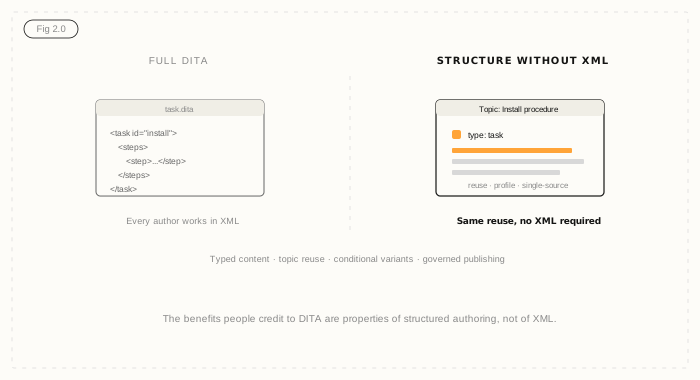
Here is the part teams miss: the benefits people credit to DITA - typed content, topic reuse, single-source publishing, conditional variants, clean governance - are properties of structured authoring, not of XML. You can have all of them without writing or reading a line of DITA.
Author-it works this way. Content is authored as reusable components (Topics) assembled into deliverables (Books), and published single-source to PDF, HTML5, eLearning, and AI-ready JSON. You get topic typing, reuse, and profiling - the DITA-style discipline - without making every author an XML specialist. If a team wants to operate with DITA-like rigour, it can. If it does not, it is not forced into XML just to get reuse and governance.
That optionality is the point. DITA makes the strict model mandatory. A structured CCMS without XML lets you dial the rigour up or down to match the team you actually have.
When DITA is genuinely the right call
DITA earns its cost in specific situations, and it is worth naming them honestly. If you exchange content with partners who mandate DITA, if you run a very large and highly standardised documentation operation with the staff to support an XML model, or if strict interchange across many independent toolchains is a hard requirement, DITA's discipline pays back.
Outside those cases, most teams want the outcomes - reuse, single-source publishing, governance, AI-ready output - without the specification overhead. The mistake is assuming structure requires DITA. It does not. If your content lives in documents today, the more useful comparison is often docs-as-code versus a CCMS.
Where Author-it fits
Author-it has delivered structured authoring for regulated industries for 25 years, without requiring DITA or XML from authors. You get component reuse, single-source publishing, built-in review and approval, and structured JSON output for AI - the discipline of structured content, matched to the team you have rather than the one an XML standard assumes.
The result is usually lower total cost of ownership and faster onboarding, because you are not staffing and maintaining an XML model to get the benefits of structure. See where a structured CCMS fits for software and technology teams, or explore AION for the AI output side. To map your current setup against structured authoring, try the Structured Content Challenge.

DITA cost FAQ
Q: Is DITA worth the cost?
A: For some teams, yes: large standardised documentation operations, partners that mandate DITA, or strict content interchange across many toolchains. For most teams the total cost - XML skills, specialist roles, longer onboarding - outweighs the benefit, because they need the discipline of structured content, not the full DITA standard. Structured authoring delivers reuse and single-source publishing without DITA's overhead.
Q: What is the difference between DITA and structured authoring?
A: DITA is one specific XML-based standard for structured authoring. Structured authoring is the broader practice of writing typed, reusable, single-source content with formatting separated from content. You can do structured authoring without DITA. DITA is structured authoring plus a strict XML specification and toolchain, which adds both rigour and cost.
Q: Why is DITA expensive to run?
A: The licences are rarely the issue. Cost concentrates in people and process: authors who can work in XML or heavy editor training, a specialist information architect to own the model, months of onboarding before writers are productive, specialist tooling and build pipelines, and change management when the model evolves. These recur every year, not just at implementation.
Q: Can you get DITA's benefits without using DITA?
A: Yes. Typed content, topic reuse, single-source publishing, conditional variants, and governance are properties of structured authoring, not of XML. A structured CCMS can deliver all of them without requiring authors to work in DITA. Author-it does this - DITA-style structure and reuse when you want it, without the XML machinery.
Q: When should you actually choose DITA?
A: Choose DITA when you exchange content with partners who mandate it, when you run a very large and highly standardised documentation operation with the staff to support an XML model, or when strict interchange across many independent toolchains is a hard requirement. Outside those cases, structured authoring without XML usually delivers the same outcomes at lower cost.
Q: Does avoiding DITA mean giving up structure or reuse?
A: No. Avoiding DITA means avoiding a specific XML standard, not avoiding structure. A structured CCMS without XML still gives you component reuse, single-source publishing, conditional content, and audit-ready governance. You keep the discipline; you drop the specification overhead and the specialist staffing it requires.
Published on:
Author:
August 3, 2026
Osmar Silva
CTO
Related Resources
Article
How to prevent AI hallucinations in enterprise content
A practical five-step playbook to prevent AI hallucinations in enterprise content - by fixing the content your AI reads, not the model.
Article
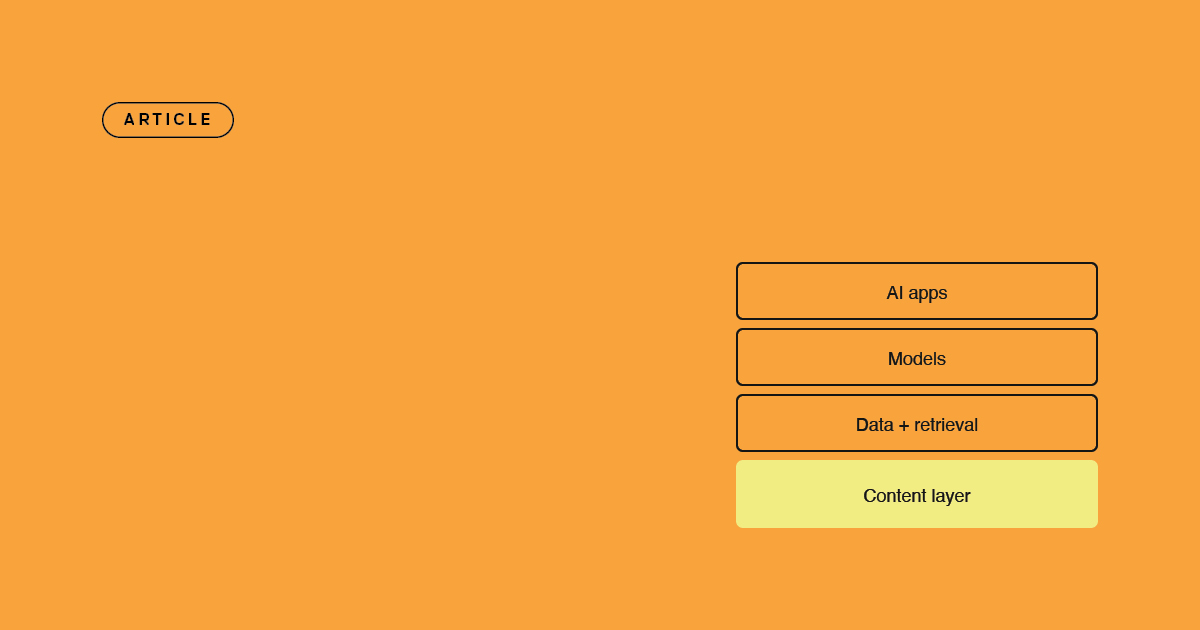
What is enterprise AI infrastructure?
The layers of enterprise AI infrastructure - and why the content layer, not compute, decides whether your AI is accurate.

Article
Content lock-in: the exit tax nobody budgets for
The cost of leaving a content platform rarely makes the business case - until you try to switch. Here is the exit tax, and how open output removes it.