Article
DITA vs structured authoring without XML

Summary:
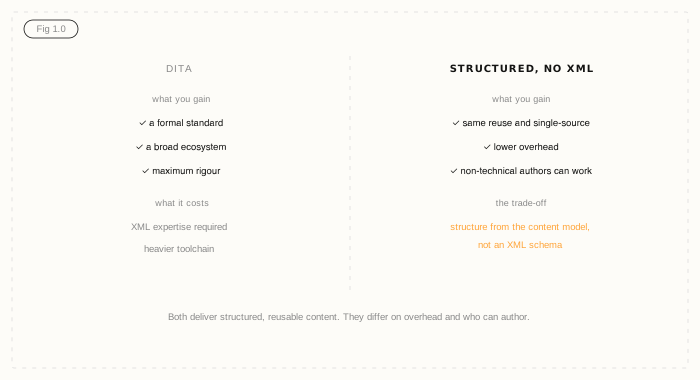
DITA versus structured authoring without XML is one of the most consequential choices in a CCMS decision, and it's a fit question, not a quality one. DITA gives you a formal standard, a broad ecosystem, and maximum rigour, at the cost of XML expertise and a heavier toolchain. Non-DITA structured authoring delivers the same content reuse and single-sourcing with lower overhead and authoring your whole team can do. This guide covers what each gives you, and when to choose which.
What DITA gives you, and what it costs
DITA is a mature, open standard for topic-based content, with a large tooling ecosystem and a strong track record in industries that need maximum structure and content exchange. If a standard is required, that's a real advantage.
The cost is expertise and complexity. DITA is XML, which means authors either learn it or work through a layer that hides it, and the toolchain around specialisation, DITA-OT, and publishing is not trivial to run. For some teams that's a fair trade. For others it's overhead that slows everyone down. If you're mid-evaluation, the evaluation checklist helps you weigh this against your other requirements.
What structured authoring without XML gives you
The important thing to understand is that structure does not require DITA. Structured authoring without XML gives you the same benefits that actually drive value - typed components, content reuse, single-sourcing, conditional content - with the structure enforced by the content model rather than an XML schema. Authors work in a familiar editing experience, and non-technical contributors aren't blocked. You give up the DITA standard itself; you keep the outcomes most teams wanted from it.
What this means for AI
Here's a point that's changed recently. For feeding AI, what matters is that content is structured, typed, and governed - not that it's DITA. A structured JSON output built for LLMs and RAG pipelines can come from a non-DITA content model just as well, because the structure the AI needs comes from the model and metadata, not the XML. So the DITA question and the AI-readiness question are separate, and you don't need the former to get the latter.
When to choose which
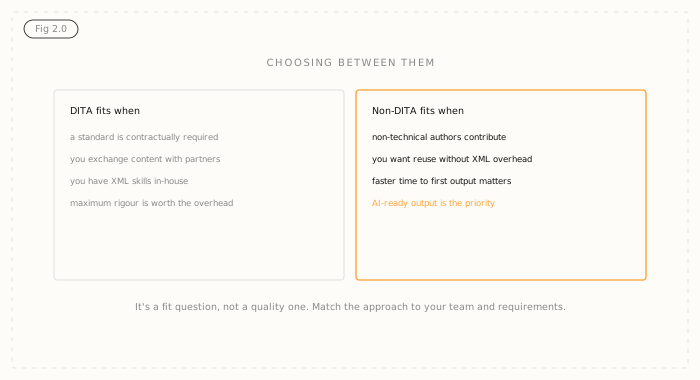
Choose DITA when a standard is contractually required, when you exchange content with partners who use it, when you already have XML skills in-house, and when maximum rigour is worth the overhead. Choose structured authoring without XML when non-technical people contribute, when you want reuse without the XML tax, when time to first output matters, and when AI-ready output is a priority. It's a fit decision, and honest vendors will tell you when their approach isn't the right one.
Where Author-it fits
Author-it is structured authoring without DITA: component reuse, single-sourcing, conditional content, version control, and a built-in audit trail, with structure enforced by the content model so your whole team can author. Its AION output gives AI a structured JSON format without requiring XML anywhere in your stack. If your requirements point to DITA, a DITA-based system may fit better - but for many teams the standard is overhead they don't need. Test where your content sits with the Structured Content Challenge.

DITA FAQ
Q: What is the difference between DITA and structured authoring without XML?
A: DITA is an XML standard where structure is enforced by an XML schema, bringing rigour and an ecosystem but requiring XML expertise. Structured authoring without XML delivers the same reuse and single-sourcing with structure enforced by the content model instead, so authors work in a familiar editor and non-technical contributors aren't blocked. Both produce structured, reusable content.
Q: Do you need DITA for structured content?
A: No. Structure comes from typing content into components and enforcing a content model, which can be done without DITA or XML. DITA is one way to achieve structure and is valuable when a standard is required, but the reuse, single-sourcing, and AI-ready output most teams want are all available without it.
Q: What are the drawbacks of DITA?
A: The main ones are XML expertise and toolchain complexity. Authors must learn XML or work through a layer that hides it, and running specialisation, DITA-OT, and publishing is non-trivial. For teams that need the standard, it's a fair trade; for others it's overhead that slows authoring and raises the cost of change.
Q: Is non-DITA structured content good enough for AI?
A: Yes. For AI, what matters is that content is structured, typed, and governed, not that it's DITA. A structured JSON output for LLMs and RAG pipelines can come from a non-DITA content model just as well, because the structure the AI needs comes from the model and metadata, not the XML. AI readiness and DITA are separate questions.
Q: When should you choose DITA?
A: Choose DITA when a standard is contractually required, when you exchange content with partners who use it, when you already have XML skills in-house, and when maximum rigour is worth the overhead. If none of those apply, structured authoring without XML usually delivers the outcomes you wanted with less cost and friction.
Q: Can non-technical authors work in a CCMS?
A: In a non-DITA CCMS, yes - structure is enforced by the content model behind a familiar editing experience, so subject-matter experts and non-technical contributors can author without learning XML. In a DITA-based system they typically need an interface that hides the XML, or they need to learn it, which raises the barrier to contribution.
Published on:
Author:
June 10, 2026
Osmar Silva
CTO
Related Resources

Article
The CCMS reckoning: six priorities for the AI era
A response to the industry's CCMS reckoning: the six priorities content leaders now face, and an honest look at which are shipped versus roadmap.

Article
The real cost of DITA - and when you don't need it
The cost of DITA is mostly staffing and process. Here is where it hides - and how to get topic reuse and single-source publishing without XML.
Article
AI content delivery: own your output, not a hub
The difference between renting an AI delivery hub and owning your content as open, portable JSON that feeds any AI stack you build or buy.