Article
Why equipment documentation breaks as you scale

Summary:
Technical documentation for equipment manufacturers gets harder at scale because the work grows faster than the product range. Every new machine, variant, and market adds operating manuals, maintenance guides, spare parts lists, and safety content - and each one has to stay correct for a decade or more. When that content lives in separate design files or documents, a single engineering change means hunting down every affected manual and editing each by hand, in every language. Copy-based tools like page-layout software were built to design one document at a time, not to manage thousands of overlapping ones. So updates slow down, versions drift, and no one is quite sure which manual in the field is current. The fix is to stop managing files and start managing content as reusable components: write once, reuse everywhere, and update every affected document from a single source. That approach is what a Component Content Management System (CCMS) is built to do.
The documentation math that catches up with you
Build one machine and the documentation is manageable: one operating manual, one maintenance guide, one parts list. Add a second product line, a handful of options, and three export markets, and the picture changes fast.
Each variant needs its own manuals. Each market needs its own languages. Each revision has to reach every document it touches. Your content doesn't grow with your product range - it grows with your product range multiplied by variants, markets, and output formats.
That's the trap. Your team grows in a straight line. Your documentation workload grows on a curve. It's a familiar story on any manufacturing documentation team, and it rarely shows up in a business case until the backlog is already hurting.
If you want to put numbers on it, you can calculate what document rework is costing you before you change anything.
Why file-based tools hit a wall
Page-layout and word-processing tools were built to design one document at a time. They're good at it. The problem starts when you need the same content in a hundred places.
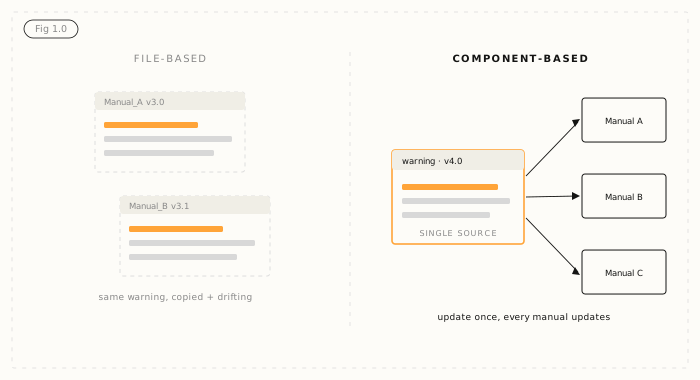
In a file-based setup, a warning that appears in 40 manuals is copied into 40 files. When engineering changes that warning, someone has to find all 40, edit each one, and re-export every language. Miss one, and the field now has two versions of a safety instruction. That's the practical case for replacing page-layout tools for documentation once volume climbs.
Here's the difference in practice:
What good looks like: manage content, not files
The fix is to stop treating a manual as the unit of work and start treating content as components.
Structured authoring means writing content as typed, reusable components - a procedure, a warning, a specification - instead of flowing text locked into a fixed layout. The content is separate from how it looks on the page.
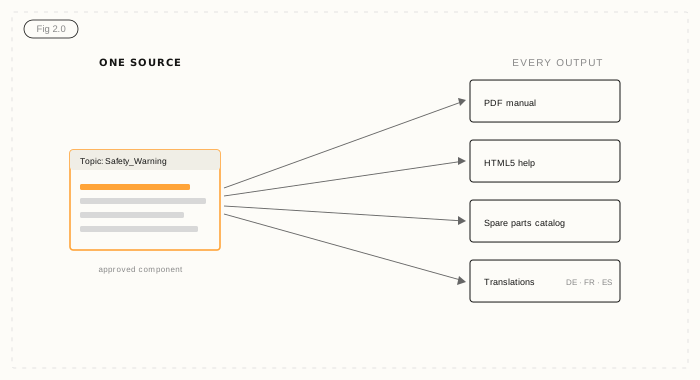
Single-source publishing means one component publishes to every output - PDF, HTML5, a parts catalog, eLearning - without rewriting. Change the source and every output follows.
Content reuse ties it together. That one approved warning is referenced in all 40 manuals. Change it once and every manual updates. The same idea underpins structured authoring and content reuse across a whole product range.
This is what a Component Content Management System (CCMS) does: it manages content at the component level, stores it once, and reuses it everywhere it's needed.
Where Author-it fits
Author-it is a CCMS, and a pioneer of the category, with 25+ years helping regulated manufacturers manage content at scale.
Instead of dozens of disconnected files, your content lives in one Library as components. Variants handle the differences between product lines and markets from the same source. Translation only touches what actually changed. Every output is generated from approved content, so the version in the field is the version you signed off.
The result is the opposite of the documentation math: you add products without adding proportional chaos.
A sensible first step is to see how ready your current content is. Try the Structured Content Challenge to benchmark where you stand today.

Equipment documentation FAQ
Q: What is a CCMS for equipment manufacturers?
A: A Component Content Management System (CCMS) manages technical content as reusable components - procedures, warnings, specifications - rather than as whole documents. Equipment manufacturers store each component once and reuse it across operating manuals, maintenance guides, and spare parts catalogs, then publish to PDF, HTML, and other formats from a single source. Update a component once and every document that uses it updates too.
Q: Why does documentation get harder as a manufacturer grows?
A: Because documentation scales with product lines multiplied by variants, markets, and formats, not with headcount. Each new machine or option adds manuals, and each has to stay correct for years. In file-based tools, every change means editing many separate documents by hand, so the workload grows faster than the team can keep up.
Q: Can we keep using page-layout and word-processing tools?
A: You can, but they were built to design one document at a time, not to manage thousands of overlapping ones. They have no real content reuse, so shared content is copied between files and drifts out of sync. As the number of manuals, languages, and formats grows, the manual effort and version risk grow with it.
Q: What is single-source publishing?
A: Single-source publishing means writing content once and publishing it to multiple outputs - PDF, HTML5, parts catalogs, eLearning - from one source. A change in the source flows to every output automatically, so you don't maintain separate copies for each format or channel.
Q: How much content can equipment manufacturers reuse?
A: Reuse depends on how similar your products and documents are, but manufacturers with families of related machines often reuse 60% or more of their content across product lines and markets. High reuse means writers spend time on genuinely new content instead of recreating warnings, procedures, and specifications that already exist.
Q: Do we need to move everything at once?
A: No. Most manufacturers start with the highest-volume or highest-risk content - the manuals that change most often or carry the most compliance weight - and migrate in phases. A structured content platform and an experienced implementation team make it possible to move from existing files without stopping production.
Q: How does structured content help with AI and search?
A: Structured, approved content is exactly what AI systems need to answer accurately. When your manuals live as governed components, search tools, chatbots, and field-service assistants can retrieve precise, traceable answers instead of guessing from unstructured PDFs. Clean, structured content is the foundation for trustworthy AI.
Published on:
Author:
July 24, 2026
Jamie Simmonds
Documentation Manager
Related Resources

Article
The real cost of DITA - and when you don't need it
The cost of DITA is mostly staffing and process. Here is where it hides - and how to get topic reuse and single-source publishing without XML.
Article
AI content delivery: own your output, not a hub
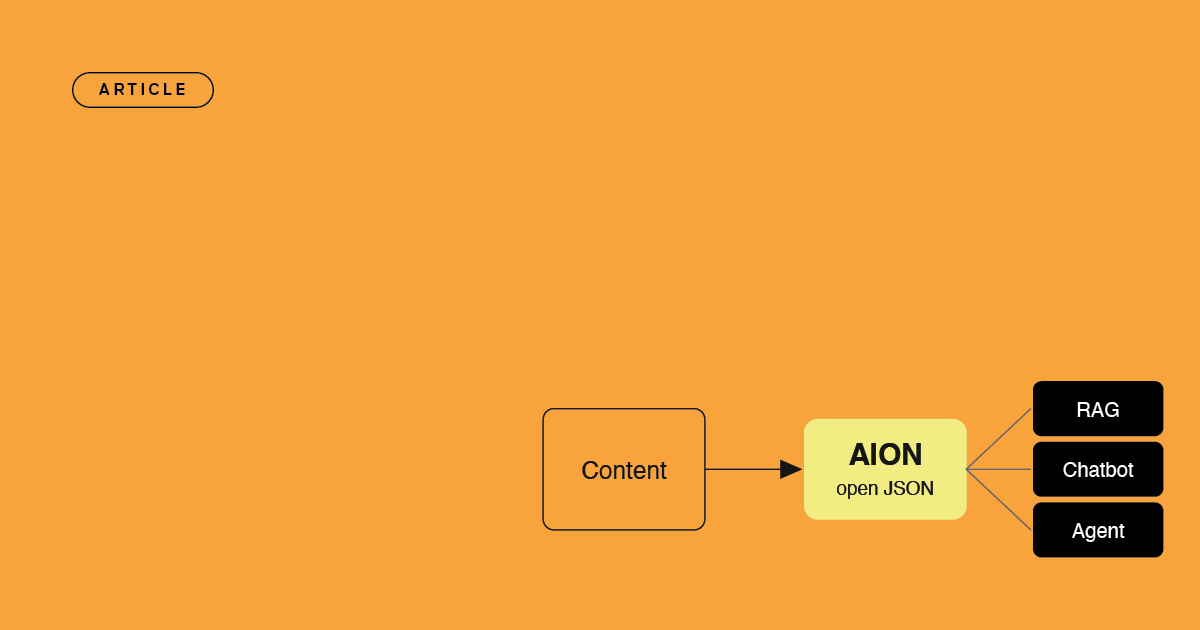
The difference between renting an AI delivery hub and owning your content as open, portable JSON that feeds any AI stack you build or buy.
Article
Managing spare parts catalogs across variants
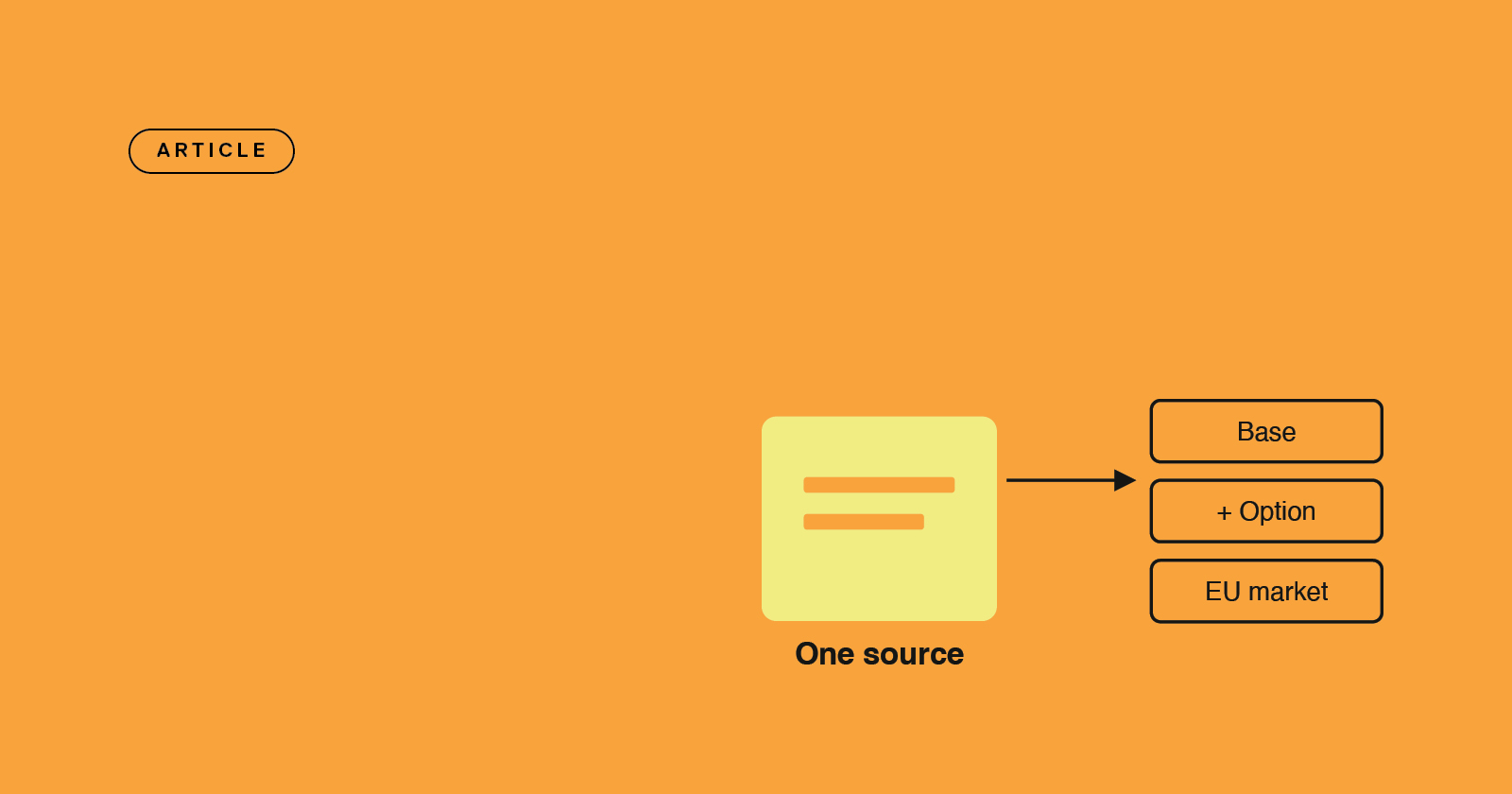
Options, revisions, and regional variants multiply parts lists and service manuals fast - here's how to maintain them all from a single source.