Article
Why one HVAC product change breaks every manual

Summary:
Updating one HVAC product change ripples across dozens of manuals because the same spec lives in dozens of separate documents. A single refrigerant swap, control-board revision or charge-weight correction touches the installation and operation manual, the service guide, the safety data sheet, training material and the spec sheet - then multiplies again across product lines and every language you ship. In a document-based world each of those files is a hand-edited copy, so one change means finding, editing and re-checking every copy by hand, and any file you miss drifts out of sync. HVAC manual version control fails here because the document, not the shared content, is the unit of work. Component-level single-source authoring flips that: you store the shared spec once, every deliverable references it, and one edit propagates everywhere with a full audit trail. Author-it works this way, so a product change updates the content once instead of dozens of times.
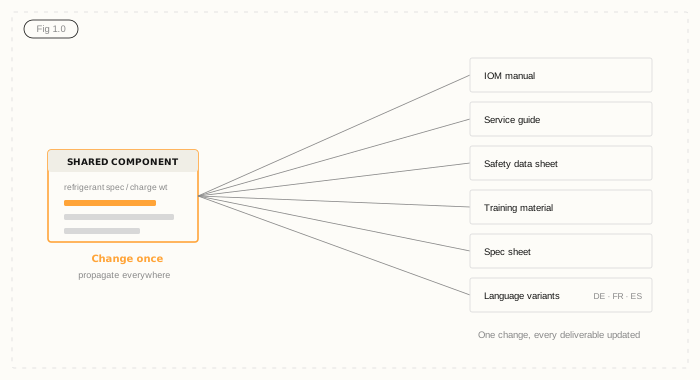
One change, a dozen documents
Picture a routine engineering change. Your team switches a light-commercial split from R-410A to an A2L refrigerant, or corrects a factory charge weight on a ducted line. On the floor it's a small, well-understood update. In the documentation, it's a chain reaction.
That single value appears in the installation and operation manual, the service and troubleshooting guide, the safety data sheet, the commissioning checklist, the training deck and the published spec sheet. Now multiply that by every model in the series, every regional variant, and every language you ship into. One change on the product side becomes dozens of edits on the content side. This is the mechanics behind the broader HVAC documentation problem in manufacturing: the work of documenting a change routinely takes longer than making the change itself.
The A2L transition makes this concrete. Systems on the newer refrigerants have to be labelled with refrigerant type, flammability classification and charge weight, and commissioning packages now carry weigh-in and leak-test records. Get one of those values wrong in one manual and you don't just have a typo - you have a document that no longer matches the unit in the field.
Why the copies drift out of sync
The root cause isn't sloppy writers. It's the unit of work. In a document-based process, the file is the thing you own, so the same refrigerant spec gets copied into every manual that needs it. Each copy then lives its own life.
When the value changes, someone has to find every file it landed in, open each one, edit it by hand, and re-check formatting and pagination. Miss one, and that manual now contradicts the others. Multiply that across a few hundred SKUs and you can't say with confidence which version a distributor, installer or field tech is actually holding. That's HVAC documentation version chaos, and it's structural, not accidental. Managing versions inside page-layout tools makes it worse, because layout files bind content and formatting together - a problem we cover in more depth in version control for technical manuals built in page-layout tools.
The difference between the two models is worth being precise about.
What good looks like: change the shared component once
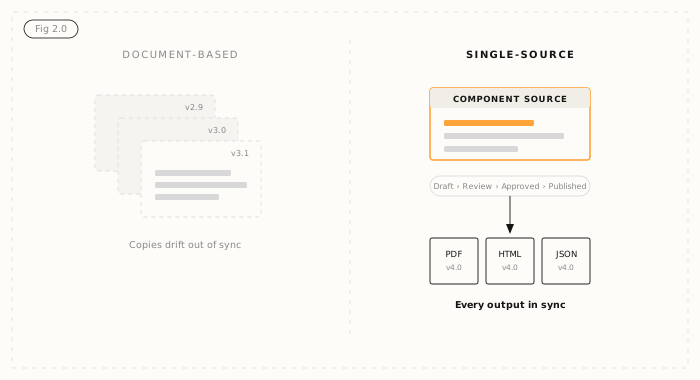
The fix is to stop treating the document as the source. Store each shared piece of content - a refrigerant spec, a safety warning, a torque value, a wiring note - as a single component. Every manual, guide and datasheet that needs it references that one component instead of holding its own copy.
Now the change is small again. You update the component once. Every deliverable that references it picks up the new value automatically, across product lines and outputs. Translation follows the same logic: only the component that actually changed goes for translation, so you're not paying to re-translate an entire manual because one number moved. This is single-source publishing for HVAC manuals in practice - write once, publish everywhere, stay consistent by design rather than by heroics.
Where Author-it fits
Author-it is a Component Content Management System - a CCMS - built for exactly this. It's been used in regulated manufacturing documentation for over 25 years, where an out-of-date spec isn't just embarrassing, it's a compliance and safety risk.
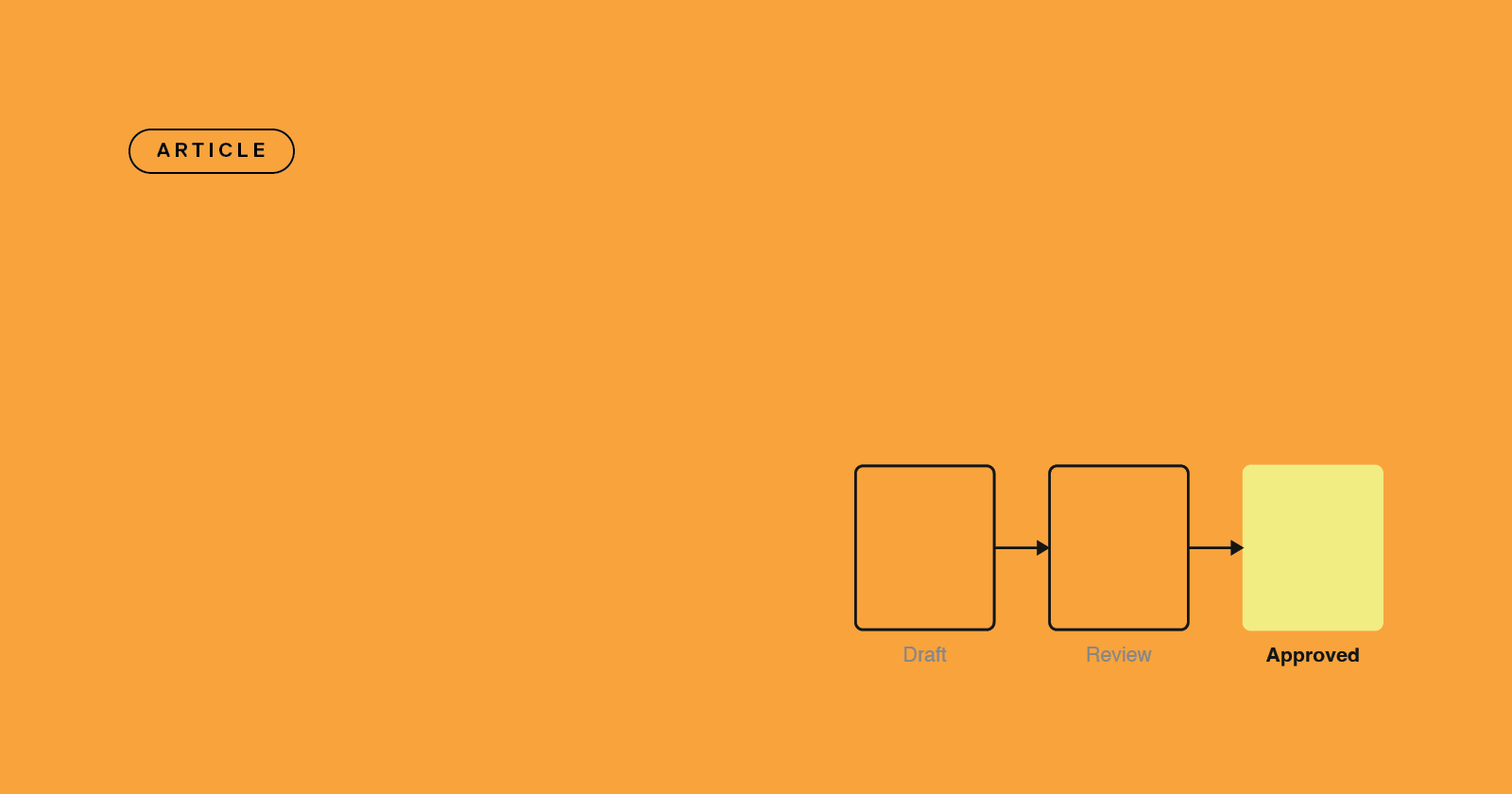
Content lives as reusable components in a single library. Structured authoring separates the content from the formatting, so you're editing the value, not fighting the layout. Component-level version control and release states - Draft, In Review, Approved, Published - mean you always know which version is current and can prove what changed, when, and who signed it off. Manufacturers running this model report 60-70% content reuse and translation costs cut by up to 90%, because the same components carry across their whole product range instead of being rebuilt for each manual.
The point isn't more software. It's changing the unit of work so a product change is one edit, not dozens.
Start with the real cost
If you want a number rather than a hunch, work out what these ripple edits actually cost you today - the hours per change, multiplied by changes per year, multiplied by languages. Then compare that to a single-source model. You can put your own figures into the Author-it ROI calculator to see what component reuse is worth for your documentation set. For most HVAC teams, the cost isn't the change. It's every copy of it.

HVAC documentation FAQ
Q: Why does updating one HVAC product change dozens of manuals?
A: Because the same spec is copied into many separate documents. A single change - a refrigerant swap, a charge weight, a control-board revision - appears in the installation and operation manual, the service guide, the safety data sheet, training material and the spec sheet, then repeats across product lines and languages. In a document-based process each of those is a hand-edited copy, so one change becomes dozens of edits. A component-based model stores the shared content once and lets every deliverable reference it, so the change is made a single time.
Q: What is HVAC manual version control?
A: HVAC manual version control is the practice of keeping every manual, guide and datasheet consistent and traceable as products change. Done well, it tracks what changed, when, and who approved it. It breaks down when content is spread across many separate files, because there's no single record of the current version and copies drift apart.
Q: What causes HVAC documentation version chaos?
A: The file being the unit of work. When each manual holds its own copy of a shared spec, a single product change has to be edited into every file by hand. Miss one and manuals start contradicting each other, and no one can say with confidence which version the field is actually using.
Q: How does component reuse help HVAC documentation?
A: Component reuse stores each shared piece of content - a warning, a spec, a torque value - once, and lets every document reference it. Change the component and every deliverable updates automatically. Manufacturers using this model commonly reach 60-70% content reuse, so writers spend time on new content rather than re-creating what already exists.
Q: How does single-source authoring cut HVAC translation costs?
A: Only new or changed components go for translation. If a component hasn't changed, you don't pay to translate it again. Because one product change touches a small number of components rather than whole manuals, translation spend drops sharply - manufacturers report reductions of up to 90% at high reuse rates.
Q: Does this need DITA or XML?
A: No. Author-it provides structured, component-based authoring without requiring DITA or XML skills. Writers work in a familiar editor while the system handles reuse, versioning and multi-format publishing underneath.
Q: How do release states prove which manual version is current?
A: Release states move content through a defined lifecycle - Draft, In Review, Approved, Published, Archived. Only approved content publishes, and the system records what changed, when, and who signed it off. That gives you an audit trail and a definitive answer to which version is live across every product line.
Published on:
Author:
June 30, 2026
Osmar Silva
CTO
Related Resources
Article
Managing spare parts catalogs across variants
Options, revisions, and regional variants multiply parts lists and service manuals fast - here's how to maintain them all from a single source.
Guide
CCMS for HVAC manufacturers: a buyer's guide
CCMS for HVAC manufacturers must handle refrigerant change, variant sprawl, and multi-market translation. Here are the criteria to score vendors before you buy.
Article
Audit-ready compliance docs for HVAC manufacturers
HVAC compliance documentation - UL 60335-2-40, CE, AHRI, F-Gas - stays audit-ready through controlled versions and a provable approval trail.