Guide
CCMS for HVAC manufacturers: a buyer's guide

Summary:
Choosing a CCMS for HVAC manufacturers comes down to whether the system fits your real conditions: refrigerant transitions, thousands of model variants, multi-country distributor networks, dense compliance, and field technicians who need accurate manuals. Look for structured authoring without DITA or XML, so writers stay productive. Look for component reuse, so a changed warning updates everywhere at once. Look for release states with a full audit trail, so you can prove which version shipped. Look for translation reuse, so you only pay to translate what changed. And look for single-source publishing to every output your channels need, including AI-ready AION JSON. A strong Component Content Management System also comes with services-led implementation and a clean migration path from Word, InDesign, and SharePoint. Author-it has done this in regulated manufacturing for 25 years. Score every vendor against these criteria and you will choose well, even if you never pick us.
Why HVAC breaks a general-purpose documentation setup
Most documentation tools are built for a simpler world: a handful of products, one language, one output format, and rules that rarely change. HVAC is the opposite of that. This guide assumes you already recognise the documentation problem facing HVAC manufacturers and want to know what to evaluate before you buy.
Your reality looks more like this:
Refrigerant churn. The move to A2L refrigerants like R-454B and R-32 changed labelling, charge-weight data, leak-test records, and compliance statements across your catalogue in a single regulatory cycle. Every affected manual had to change with it.
Thousands of variants. HVAC model numbers encode series, tonnage, efficiency, voltage, phase, and refrigerant. Each configuration needs matching documentation, and most of it is 80% identical to its neighbours.
Multi-country distribution. Your content ships through distributor networks across many markets and languages. The same install guide might need to exist in a dozen languages, all kept in sync.
Dense compliance. UL 60335 series, CE marking, AHRI ratings, ASHRAE labelling, Ecodesign, and the EU Right to Repair rules all touch your documentation, and auditors expect to see which version applied when.
Field-service accuracy. When a technician opens the wrong manual, the first-time-fix rate drops and a return visit costs $100 to $250. Accurate, current content in the field is a margin issue, not a nicety.
A tool that ignores any one of these will cost you later. So the evaluation is not "which CCMS has the most features." It is "which Component Content Management System fits HVAC reality."
What to look for in a CCMS for HVAC manufacturers
Here is a decision-stage checklist. Score every vendor on the same criteria, and weight the ones that map to your biggest pain. The table below maps each criterion to what good looks like when your content is HVAC content.
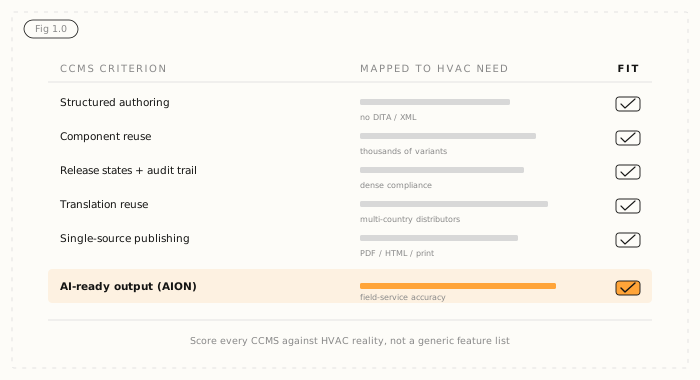
The criteria in detail
Structured authoring without DITA or XML
Structured authoring separates content from formatting and breaks documents into typed components: procedures, warnings, specs, concepts. That structure is what lets you reuse and single-source. The catch is that many structured systems reach it through DITA and XML, which asks your writers to learn markup before they can write a warning. For an HVAC team already stretched, that is a slow, expensive path. Look for structured authoring that gives you the rigour without the XML tax.
Component reuse
Reuse is the single biggest lever in HVAC documentation. If a refrigerant warning lives in one place and every manual references it, one edit updates every manual. If it is copied and pasted across hundreds of documents, one change becomes weeks of find-and-replace and a version-control risk. Ask each vendor to show reuse working at the component level, not just file-level templating.
Release states and audit trail
Compliance is where HVAC documentation gets serious. You need to know which version of a manual was approved, published, and shipped with a given unit, and prove it to an auditor. Look for built-in release states (draft, review, approved, published) and a full audit trail as a native capability, not a bolt-on workflow add-on. This is also the backbone of an approach that holds up in regulated industries.
Translation reuse
Translating everything for every market, every time, is the fastest way to burn a documentation budget. Smart translation reuse sends only new or changed components for translation and leaves unchanged content alone. For a manufacturer running a dozen or more languages through distributor networks, this is where the biggest savings live. Author-it customers have cut translation spend by up to 90% this way.
Single-source, multi-output publishing
Your content has to land as a print manual, a PDF, an online help page, and increasingly as structured data an AI system can read. Single-source publishing means you write once and publish to all of these without reformatting by hand. The AI-ready output matters more each quarter: field-service assistants and customer portals are only as accurate as the content behind them. Author-it's AION output ships structured JSON built for LLM and RAG ingestion, and its publishing gate means unapproved content cannot reach that output.
Services-led implementation and migration
The tool is half the decision. The other half is whether the vendor helps you design the information architecture, model your variants, and migrate off Word, InDesign, and SharePoint without losing your history. Most CCMS failures trace back to poor IA design or weak onboarding, not bad software. Ask what the vendor actually does in the first 90 days, and whether they have migrated HVAC-scale catalogues before.
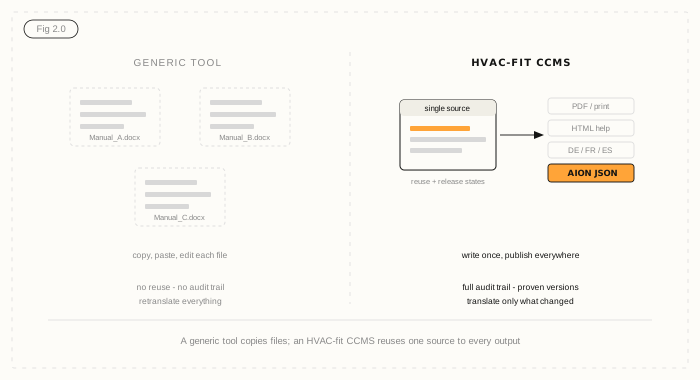
Score vendors, do not just demo them
Demos flatter every product. A scorecard does not. Turn the checklist above into a weighted scoresheet, rank your criteria by the pain that keeps you up at night, and make each vendor prove the top three with your own content. If you want a neutral starting point, a general CCMS vendor evaluation checklist gives you the questions that apply beyond HVAC too. Then quantify the upside: reuse and translation savings usually cover the cost of the system faster than teams expect. You can calculate your content ROI before you commit.
Where Author-it fits
Author-it is a Component Content Management System built for exactly this kind of work: regulated, high-variant, multi-language documentation at scale. It gives you structured authoring without DITA or XML, component-level reuse, release states with a full audit trail, smart translation reuse, and single-source publishing to PDF, HTML, print, and AI-ready AION JSON. It has 25 years in regulated manufacturing and a services team that has migrated large catalogues off legacy tools.
We are not the only credible CCMS, and this guide is written so you can choose well even if you pick someone else. But if your reality is refrigerant churn, thousands of variants, and distributor networks across many markets, the criteria above tend to point in one direction. Run the Structured Content Challenge to benchmark your current setup against what a real CCMS should deliver, and you will have a clear, evidence-based picture before any sales conversation.

HVAC CCMS FAQ
Q: What is a CCMS and why do HVAC manufacturers need one?
A: A CCMS, or Component Content Management System, manages documentation at the component level: individual procedures, warnings, and specs stored once and reused across many manuals, rather than whole documents copied and edited by hand. HVAC manufacturers need one because their content is high-variant, multi-language, and heavily regulated. A single product line can run to thousands of model configurations, each needing matching install, operation, and service documentation, and most of that content is nearly identical from one variant to the next. When a refrigerant rule or a safety warning changes, a CCMS updates every affected manual from one source instead of forcing a manual edit across hundreds of files. It also tracks release states and keeps an audit trail, so you can prove which version shipped. For HVAC teams, a CCMS turns documentation from a recurring fire drill into a controlled, reusable, single-source process.
Q: What should HVAC manufacturers look for in a CCMS?
A: Prioritise structured authoring without DITA or XML, component-level reuse, release states with a full audit trail, smart translation reuse, and single-source publishing to every output including AI-ready JSON. Then weight those criteria by your biggest pain, whether that is refrigerant compliance, variant sprawl, or translation cost. Also assess the vendor's services and migration track record, not just the software.
Q: Do we need DITA or XML to get structured content?
A: No. Structured authoring separates content from formatting and breaks documents into reusable typed components, but you do not have to reach that through DITA or XML. Some systems require markup expertise before a writer can produce a warning, which slows adoption. Author-it delivers structured authoring without DITA or XML, so writers stay productive from day one.
Q: How does a CCMS reduce HVAC translation costs?
A: It reuses translations. When content is stored as components, only new or changed components go for translation and unchanged content is left alone. For a manufacturer running a dozen or more languages through distributor networks, that avoids paying to retranslate content that has not changed. Author-it customers have cut translation spend by up to 90% this way.
Q: How does a CCMS help with HVAC compliance and audits?
A: Through release states and an audit trail. Content moves through defined stages such as draft, review, approved, and published, and the system records who approved what and when. That lets you prove which version of a manual applied to a given unit under standards like the UL 60335 series, CE marking, and ASHRAE labelling. Approval controls also stop unapproved content from being published.
Q: What makes a CCMS AI-ready, and why does it matter for HVAC?
A: AI-ready means the system can publish content as structured data an AI system can ingest accurately, not just as PDFs. It matters because field-service assistants and customer portals are only as accurate as the content behind them. Author-it's AION output ships structured JSON built for LLM and RAG pipelines, and its publishing gate ensures only approved content reaches that output.
Q: How hard is it to migrate from Word, InDesign, or SharePoint?
A: Less painful than most teams fear, if the vendor runs it properly. The work is mostly about designing the information architecture and modelling your variants before content moves. Author-it's services team has migrated large regulated catalogues off Word, InDesign, and SharePoint, and most projects complete within about 90 days.
Q: How do we evaluate CCMS vendors fairly?
A: Turn your criteria into a weighted scorecard and make each vendor prove the top items with your own content, not a canned demo. Rank criteria by your biggest pain, then quantify the reuse and translation savings against the cost of the system. A neutral evaluation checklist helps you ask the same questions of every vendor.
Published on:
Author:
May 26, 2026
Adrian Winks
CEO
Related Resources
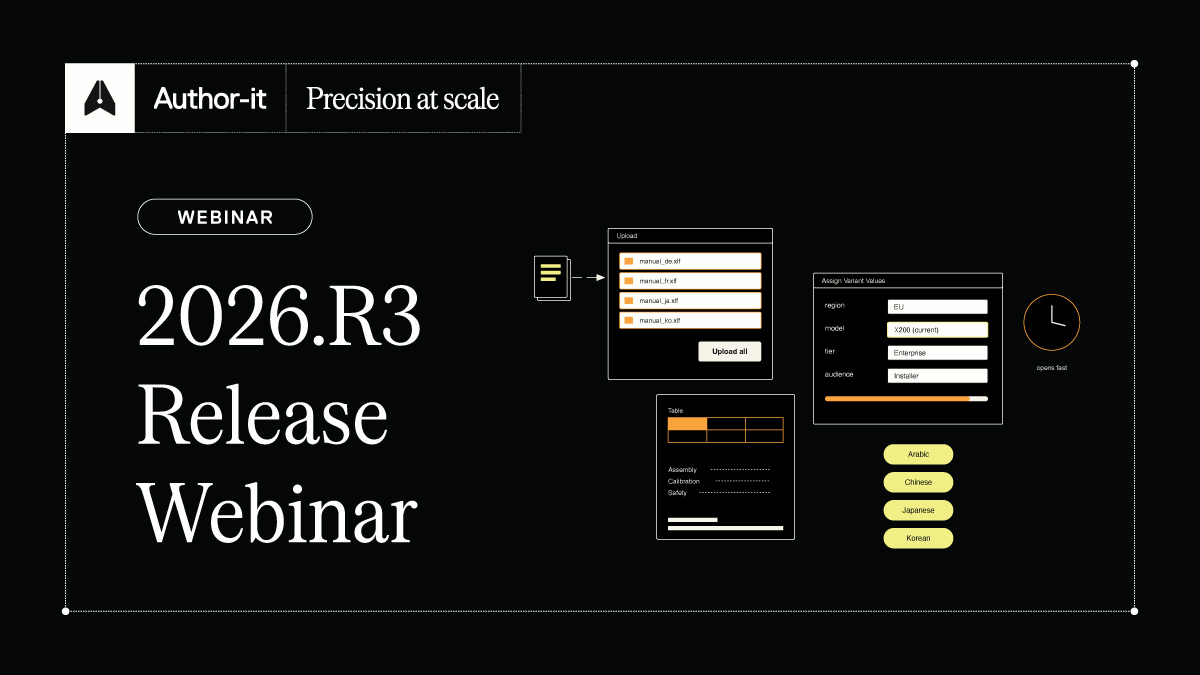
Webinar
Author-it 2026.R3 Release Webinar - What's New
The full Author-it 2026.R3 release webinar recording, with the biggest New Word update yet, richer AION output, and the R3 go-live dates.
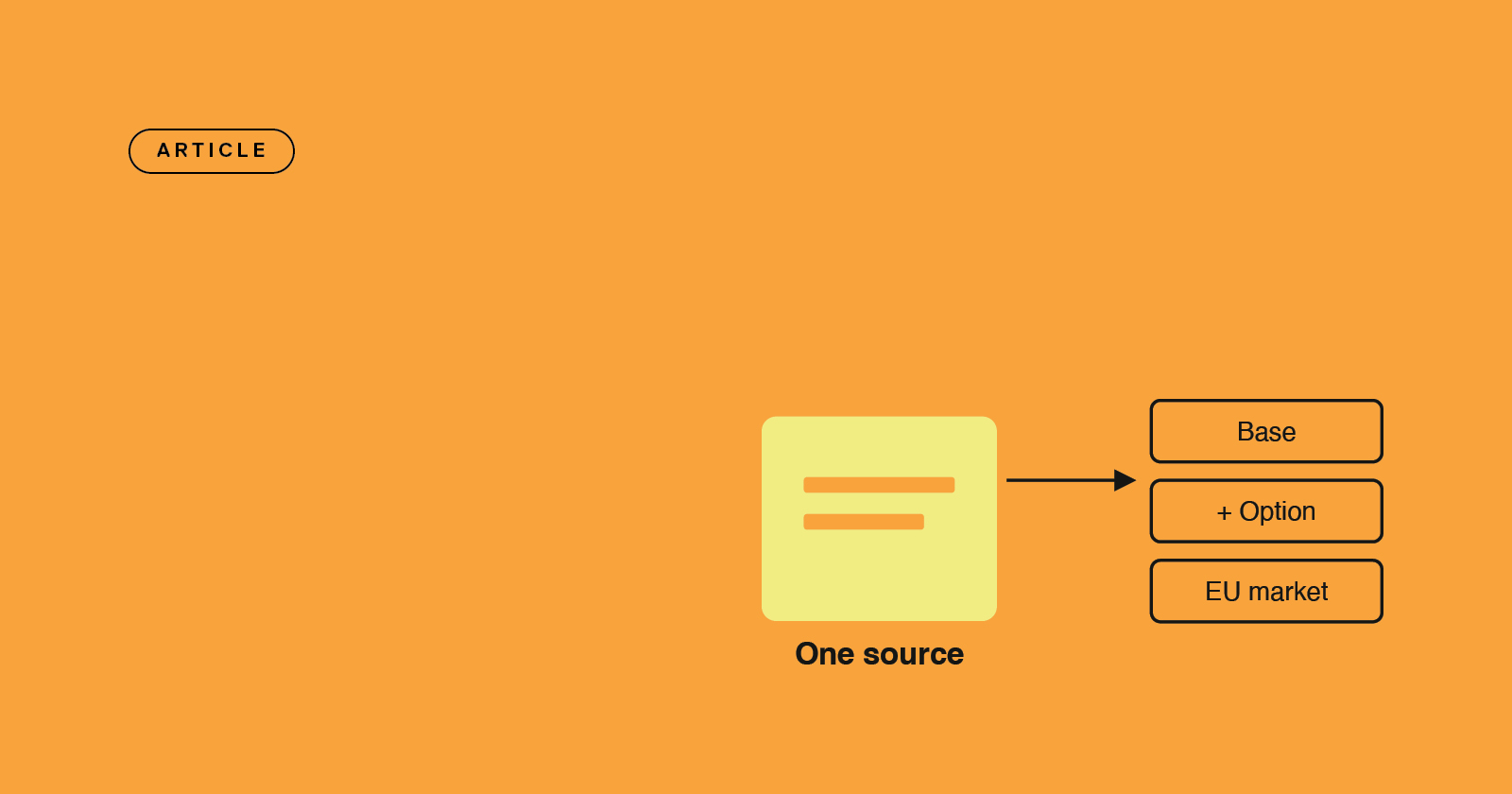
Article
Managing spare parts catalogs across variants
Options, revisions, and regional variants multiply parts lists and service manuals fast - here's how to maintain them all from a single source.

Guide
CCMS for HVAC manufacturers: a buyer's guide
CCMS for HVAC manufacturers must handle refrigerant change, variant sprawl, and multi-market translation. Here are the criteria to score vendors before you buy.