Article
Field crew AI: when a wrong answer is a safety risk

Summary:
A line crew stands at a substation, ready to de-energize a feeder, and asks an AI assistant which isolation sequence applies. In that setting a wrong answer is not an inconvenience - it is an arc flash, a backfeed, or a crew member in the wrong place at the wrong moment. That is what separates field crew AI from an office chatbot: the answer becomes a physical action with a safety consequence. Safety-critical AI cannot run on ungoverned content. It needs three things: source content structured so the AI retrieves the exact approved procedure, governance so unapproved or superseded steps can never be surfaced, and provenance so every answer traces to a named, approved source a crew and an auditor can verify. The model is not the risk. The content feeding it is. Get that wrong and a confident answer becomes a safety incident; get it right and AI earns a place in the field.
Why a wrong answer in the field is different
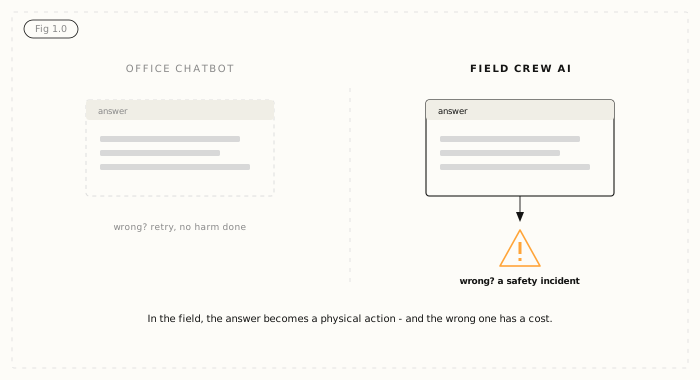
An office worker who gets a bad answer from a chatbot notices, shrugs, and retries. A field crew acts on the answer, often on energized equipment, in a confined space, or near moving plant. There is no undo. The same wrong answer that wastes thirty seconds at a desk can injure someone in the field.
This is why AI in safety-critical operations has to clear a higher bar than AI anywhere else. It is not enough for the answer to be usually right. It has to be the approved procedure, for the right asset, at the current revision, every time. That standard is exactly what governed utilities content is built to meet.
The failure mode: confident, plausible, and wrong
The dangerous thing about a language model is not that it fails loudly. It fails smoothly. Fed ungoverned content, it will blend two procedures, surface a superseded revision, or invent a plausible step, and it will present all of it in the same calm, confident tone as a correct answer. A crew has no way to tell the difference from the wording alone.
That failure traces back to the source, not the model - the same root cause behind why AI gives wrong product answers. If the content feeding the AI is unstructured, unversioned, and ungoverned, the AI has nothing reliable to ground its answer in.
What safety-critical AI actually requires
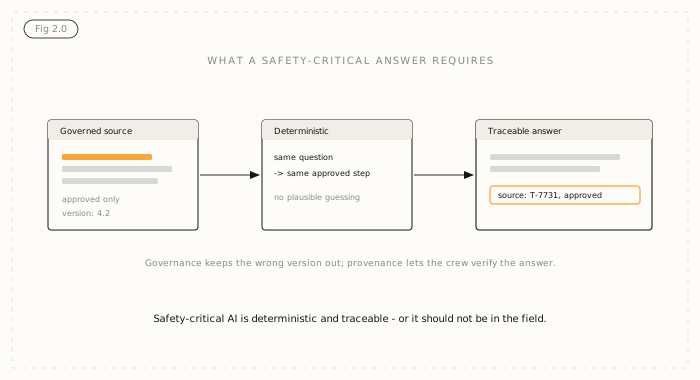
Two properties matter most in the field: the answer has to be deterministic, and it has to be traceable. Deterministic means the same question returns the same approved step, not a fresh improvisation each time. Traceable means every answer names the source and revision it came from, so a crew can verify it and a regulator can audit it.
Neither is a property of the model. Both come from the content underneath. Structured, single-source content makes deterministic retrieval possible, and component metadata makes provenance automatic. This is the foundation behind deterministic AI for regulated industries - AI whose answers you can defend, not just trust.
Governance is the safety control
Here is the concrete mechanism. In Author-it, unapproved content cannot reach the published output an AI reads from - the AION structured JSON format. That is not a setting a busy admin might forget to switch on. It is architectural: content has to pass through Review and Approve before it can be published at all, so a draft or superseded revision physically cannot become the answer a crew acts on. The publishing gate is the governance layer.
For safety-critical work, that constraint is the point. It turns governance from a policy people are asked to follow into a control the system enforces - the same discipline behind audit-ready utilities compliance documentation. Every answer an AI gives from AION traces to an approved component, which is what makes it defensible after the fact.
Where to start
You do not roll safety-critical AI out across everything at once. Start with the procedures where a wrong answer has the highest consequence - isolation, lockout, confined-space entry, emergency response - and get those structured, approved, and governed first. Prove the AI answers them deterministically, with provenance, before you widen scope. The Structured Content Challenge is a quick way to see how ready your current content is to carry that weight. In the field, the content foundation is the safety case.

Field crew AI FAQ
Q: What happens when field crew AI gives a wrong answer?
A: In safety-critical field work, a wrong AI answer can become a physical action with real consequences - an incorrect isolation sequence, a superseded procedure, or a missed safety step. Unlike an office chatbot, a field crew acts on the answer on live equipment or in hazardous conditions, so the cost of a confident wrong answer can be an injury or an incident rather than a minor inconvenience.
Q: How is field crew AI different from an office chatbot?
A: The difference is consequence. An office chatbot's wrong answer is noticed and retried at a desk. A field crew AI's answer becomes a physical action, often on energized or hazardous equipment, with no undo. That raises the accuracy bar: the answer must be the approved procedure for the right asset at the current revision, every time, not just usually right.
Q: What does safety-critical AI require?
A: Safety-critical AI requires deterministic and traceable answers. Deterministic means the same question returns the same approved step rather than a fresh improvisation. Traceable means every answer names the source and revision it came from, so a crew can verify it and a regulator can audit it. Both properties come from structured, governed source content, not from the model.
Q: Can a better AI model make field answers safe?
A: No. A more capable model still grounds its answers in whatever content it retrieves. If that content is unstructured, unversioned, or ungoverned, the model can still surface a superseded procedure or blend two together confidently. Safety comes from fixing the source: structuring content into components, governing what can be published, and keeping provenance on every answer.
Q: How does governance make field AI safer?
A: Governance makes field AI safer by controlling what the AI can see. With Author-it's publishing gate, unapproved or superseded content cannot reach the published output an AI reads from, because content must pass Review and Approve before it can be published at all. That means a draft revision physically cannot become the answer a crew acts on - governance becomes a system control, not a policy people must remember.
Q: What is deterministic AI and why does it matter for field crews?
A: Deterministic AI returns the same approved answer to the same question every time, rather than improvising a plausible response. For field crews it matters because a repeatable, verifiable answer is one a crew can trust and a regulator can audit. Deterministic behavior depends on structured, single-source content so retrieval always resolves to the same approved component.
Q: Where should a utility start with field crew AI?
A: Start with the highest-consequence procedures - isolation, lockout, confined-space entry, and emergency response. Structure, approve, and govern those first, then confirm the AI answers them deterministically with provenance before widening scope. This concentrates the early work where safety risk is greatest and proves the content foundation before scaling to the full library.
Published on:
Author:
August 3, 2026
Ben Harris
Marketing Lead
Related Resources
Article
Author-it releases interactive AI grounding demonstration
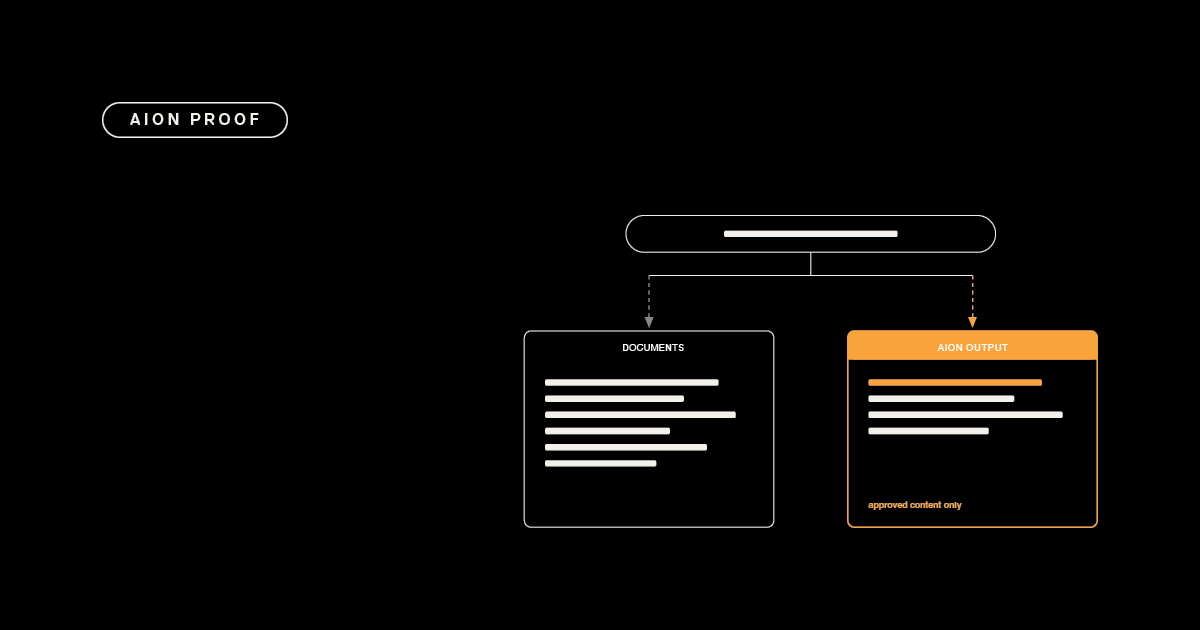
Same question, two sources: why ungoverned documents give an AI three answers and governed content gives it one, with its source attached.
Article
Field crew AI: when a wrong answer is a safety risk
Why safety-critical field operations can't run AI on ungoverned content - and what deterministic, traceable answers actually require.

Article
AI service assistants for manufacturing field techs
What it takes to put an AI service assistant in a manufacturing field tech's hands without risking a wrong, outdated, or unsafe answer.