Article
Author-it releases interactive AI grounding demonstration

FOR IMMEDIATE RELEASE
Author-it launches a tool that shows why enterprise AI returns three different answers to the same question
Browser-based demonstration spans six regulated industries, putting identical questions to an ungoverned document folder and to governed structured content.
New Zealand | 25 September 2026
Author-it has released an interactive demonstration that shows why enterprise AI systems return conflicting and unverifiable answers, even when those systems have been grounded in an organisation's own documentation. It runs in the browser at author-it.com/ai/proof, requires no signup, and takes about three minutes.
The release lands as enterprise AI programmes stall at a point implementation teams increasingly recognise. The model performs. The retrieval pipeline performs. The answers are still wrong, and nobody can explain why.
Research published in 2025 in the Journal of Empirical Legal Studies suggests the problem is not one of implementation quality. Stanford researchers tested the purpose-built, retrieval-augmented legal research tools sold by the two largest legal information providers and found hallucination rates between 17 and 33 percent - on systems retrieving from professionally curated legal databases, built by teams with every commercial incentive to get it right.
"I hear from a lot of people that wrong answers from AI are a model problem. They're not. It's a source problem," said Adrian Winks, CEO of Author-it. "A document doesn't carry a version, or an approval state, or usually even a reliable date. So when three files disagree, the system has nothing to go on. It picks one, and it doesn't tell you it guessed."
What the demonstration does
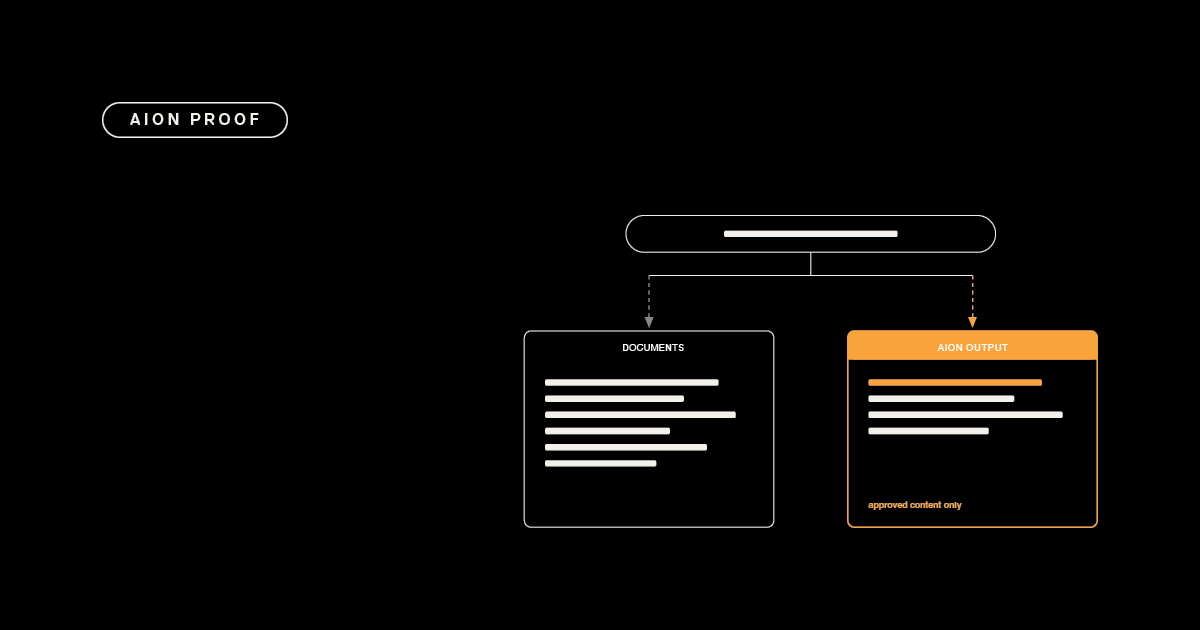
Users pick one of six industries - manufacturing, software, utilities, medical devices, financial services or government - then build an AI knowledge foundation twice over. First from a folder of documents: PDFs, Word files, Markdown exports, the ordinary contents of a shared drive. Then from AION, Author-it's structured JSON publishing output. The same questions go to both.
In the manufacturing example, asking for a torque specification returns three different values from the document set. One comes from a 2012 sales handout with no revision number. One from page 188 of the current service manual. One from a specification superseded in 2019 that nobody removed from the folder. Each is traceable only to a filename.
Put to the governed source, the same question returns one value, with the topic identifier, the author and the modification date attached to it.
Not every document-based answer in the demonstration is wrong. One question per industry returns the correct answer from the ungoverned source, and the tool points that out.
"That's the part people miss, and it's why this gets expensive rather than just annoying," said Winks. "Nobody's claiming your documents are all wrong. A source that's right most of the time, with no way to tell which times, is a source you have to check every time. That's not automation. That's a second job."
Where it bites hardest
The demonstration is aimed at enterprise architects and AI platform leads building retrieval pipelines on content they do not own, and at documentation teams being asked whether their content is "AI ready" without an agreed definition of ready.
Regulated industries face the sharpest version. In manufacturing, an incorrect torque value is a warranty claim or a recall. In utilities, a superseded isolation procedure in front of a regulator is an audit finding. In medical devices, an unvalidated cleaning agent in an instructions-for-use document is a corrective action at best.
"Every one of those is an answer somebody has to put their name to," said Winks. "What teams are finding is that they can't, and it has nothing to do with which model they picked."
Availability
The demonstration is open at author-it.com/ai/proof with no registration. Author-it has also published a companion guide, The AI Content Readiness Guide, covering content auditing, chunking strategy, embedding, provenance filtering and grounding evaluation. The guide is vendor-neutral and available at author-it.com/ai-content-readiness-guide in exchange for a work email address.
The demonstration uses fictional product data and scripted responses. The AION output format shown is Author-it's live output, shipped in the 2026.R1 release and included in every Author-it Cloud subscription at no additional cost.
About Author-it
Author-it is an enterprise component content management system (CCMS) and the AI content foundation for regulated industries. Founded in 1999 and trusted by global organisations in manufacturing, software, and utilities, Author-it enables teams to create, manage, review, translate, and publish structured content at scale - and to publish that same content as AI-ready JSON via AION, its native output format for LLMs and RAG pipelines. Learn more at author-it.com.
Media contact Ben Harris, ben.harris@author-it.com Website: author-it.com

Press release FAQ
What does the Author-it AI proof demonstration show?
It shows why an AI system grounded in an organisation's own documentation can still return conflicting and unverifiable answers. Users build an AI knowledge foundation twice over, once from a folder of ordinary documents and once from governed structured content, then put the same questions to both and compare what comes back. In the manufacturing example, the document set returns three different torque values traceable only to filenames; the governed source returns one value with its topic identifier, author and modification date attached.
Which industries does the demonstration cover?
Six: manufacturing, software, utilities, medical devices, financial services and government. Each has its own set of six questions, its own source documents and its own worked examples, so the consequences shown are specific to that sector rather than generic.
Does the demonstration use a live AI model?
No. The responses are scripted and the product names and document titles are fictional, so that the same comparison is reproducible for every visitor. The AION output format shown in the demonstration is Author-it's live output, shipped in the 2026.R1 release. The demonstration is a teaching tool rather than a benchmark, and it says so on the page.
What did the Stanford research referenced in the announcement find?
Researchers at Stanford tested the purpose-built, retrieval-augmented legal research tools sold by the two largest legal information providers and measured hallucination rates between 17 and 33 percent, despite those systems retrieving from professionally curated legal databases. The study was published in 2025 in the Journal of Empirical Legal Studies. It is cited in the announcement because it establishes that retrieval quality alone does not resolve the problem, even on well-maintained sources.
What is AION?
AION is Author-it's structured JSON publishing output, designed for ingestion by large language models and retrieval-augmented generation pipelines. Each node carries the content hierarchy, object identifiers, template name, timestamps, authorship, folder path and resolved variable values. It shipped in the 2026.R1 release and is included in every Author-it Cloud subscription at no additional cost.
Is there a technical guide to accompany the demonstration?
Yes. The AI Content Readiness Guide covers content auditing, chunking strategy, embedding, provenance filtering, grounding evaluation and a thirty day implementation plan. It is vendor-neutral and every step works on any content source.
Who should media contact about this announcement?
Ben Harris, ben.harris@author-it.com. Interview requests, additional detail and assets are available on request.
Published on:
Author:
September 25, 2026
Ben Harris
Marketing Lead
Related Resources
Article
Author-it releases interactive AI grounding demonstration
Same question, two sources: why ungoverned documents give an AI three answers and governed content gives it one, with its source attached.
Article
Field crew AI: when a wrong answer is a safety risk
Why safety-critical field operations can't run AI on ungoverned content - and what deterministic, traceable answers actually require.
Article
CCMS for SaaS: why software docs are different
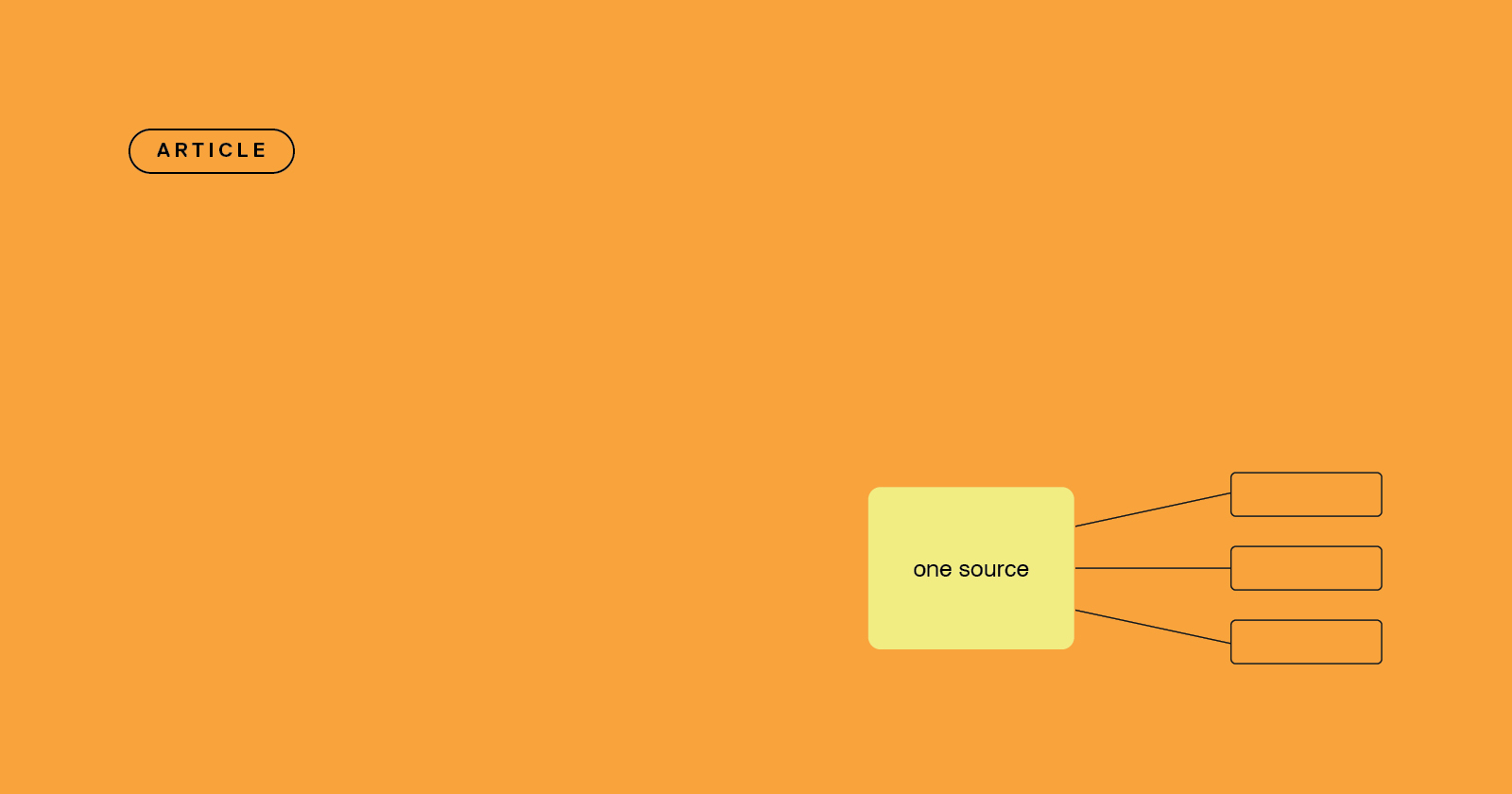
SaaS content has to ship on the release cadence and feed several surfaces at once, from one source.