Article
Why HVAC field techs get outdated manuals

Summary:
A field tech standing at an unfamiliar unit with an out-of-date PDF is one of the most expensive problems in HVAC service. The industry first-time fix rate target sits around 80%, so roughly 1 in 5 calls still needs a return visit at $100 to $250 each. The cause is rarely the technician. It's HVAC field service documentation that gets published once and then never reliably updated. This piece covers why manuals go stale, what current service documentation actually requires, and how single-source publishing gets the approved version to the service portal or app. For the wider context, see the HVAC documentation problem for manufacturers.
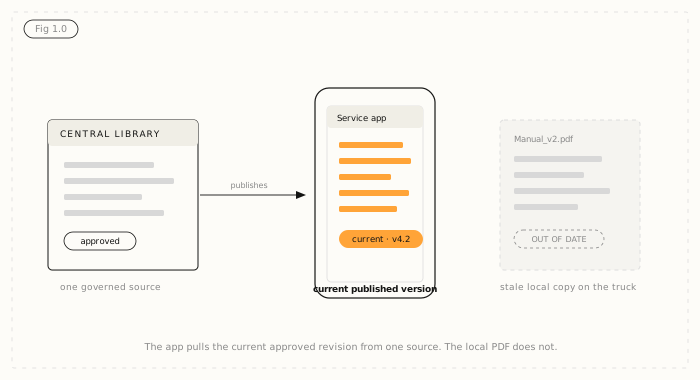
The real cost of an outdated manual
When a tech opens the wrong revision, the job stalls. A superseded wiring diagram, a torque spec that changed, a part number retired two model years ago - any one of these turns a routine call into a return visit.
First-time fix rate is the metric that captures the damage. Most HVAC service organisations target around 80%, which sounds healthy until you flip it: 1 in 5 calls fails on the first attempt. Each callback costs somewhere between $100 and $250 in labour, travel, and a second truck roll, before you count the customer trust you just spent.
Current documentation on a mobile device is not a nice-to-have. Field service studies put the lift from good mobile knowledge at 8 to 15 percent on first-time fix, and around 20 to 25 minutes saved per job. The manual isn't a formality. It's the difference between one visit and two.
Why HVAC field manuals go stale
Here's the uncomfortable part: the technician usually did nothing wrong. The document did.
Most HVAC service documentation is produced as a finished file - a PDF exported at launch, emailed to distributors, loaded onto a tablet, saved to a shared drive. From that moment it starts drifting out of date. A refrigerant charge is revised. A control board gets superseded. A safety label changes to meet updated A2L labelling. The source gets corrected, but the copies already scattered across trucks, laptops, and portals do not. There's no reliable path from the corrected source to the version in the tech's hand.
Scale makes it worse. HVAC product lines run to thousands of configurations, and model numbers encode series, tonnage, efficiency, voltage, and refrigerant. Every variant needs its own matching documentation, and every product change ripples across manuals, wiring diagrams, and service bulletins. Manage that with exported files and version control quietly becomes impossible. It's a pattern that repeats across manufacturing documentation generally, and it's why the field is the place it hurts most.
What current field documentation actually requires
Getting the current, approved manual into the field reliably comes down to one principle: publish from a single source, not from copies.
In a single-source model, content lives once in a central library. The service portal, the mobile app, and the PDF are all outputs of that one source. Correct the source and every output updates. The technician opens the app and gets the current revision, because there's no separate copy left to fall behind.
One word does a lot of work there: approved. Current isn't enough on its own in HVAC, where documentation ties directly to safety and compliance. The version that reaches the field has to be the one that cleared review, not a draft someone published early. Here's how the two approaches compare:
Getting the approved version to the service app
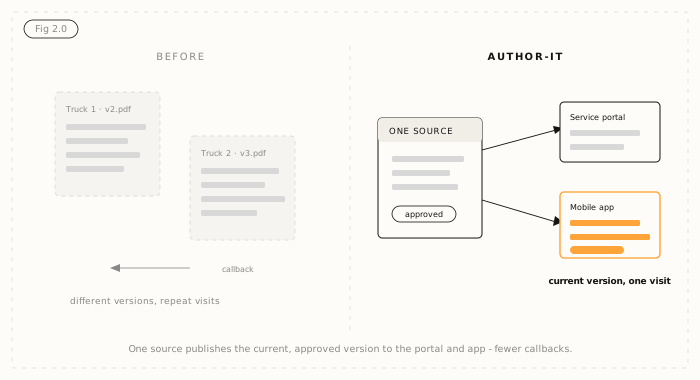
This is what a Component Content Management System is built for. In Author-it, content is authored once as structured components, routed through Review and Approve, and published to multiple outputs - PDF, HTML5, and a service portal or app - from one library. A publishing gate sits in the middle: unapproved content cannot reach the output. So the revision a technician pulls up is both current and signed off, across every SKU and every market.
That's the practical fix for callbacks. Correct a wiring diagram once, and the app reflects it the next time the tech syncs. No email chains, no "which PDF is the latest" guessing, no stale file riding around on a truck for eighteen months.
Where this is heading: trustworthy field service AI
Governed content is also the foundation for what's coming next in the field: AI assistants that answer a technician's question right at the unit. Those assistants are only as trustworthy as the content behind them. Feed them a pile of stale PDFs and they'll confidently quote a superseded spec. Feed them governed, structured content and every answer traces back to an approved source.
That's why AI-ready HVAC documentation for field service starts with the same single source, and why documentation built for AI agents has to be governed before it's useful. Author-it's structured JSON output, AION, exists to feed those pipelines from approved content, so a field-service assistant answers from the version that cleared review - not from whatever it happened to scrape.
The commercial case is simple. Every callback you avoid is $100 to $250 back, plus a customer who trusts the next visit. It starts with making sure the manual in the tech's hand is the one you actually approved.

HVAC documentation FAQ
Q: How do HVAC technicians get the right manual in the field?
A: HVAC technicians get the right manual in the field when documentation is published from a single source rather than distributed as copies. In this model, the service portal, mobile app, and PDF are all outputs of one central library, so correcting the source updates every output at once. The technician opens the app and sees the current, approved revision, because no separate file exists to fall behind. This matters because the industry first-time fix rate target is around 80%, meaning 1 in 5 calls still needs a return at $100 to $250 each, and outdated HVAC field service documentation is a common cause. A Component Content Management System like Author-it authors content once, routes it through review and approval, and uses a publishing gate so unapproved content never reaches the field. The result is technician manual access that stays current across thousands of SKUs, cutting callbacks and lifting first-time fix rates.
Q: What is first-time fix rate and why does it matter in HVAC?
A: First-time fix rate is the percentage of service calls resolved on the first visit, with no return trip. Most HVAC service teams target around 80%. The 20% that fail cost money twice: the original visit plus a callback at roughly $100 to $250 in labour, travel, and a second truck roll. Outdated documentation is a frequent, avoidable cause of those failures.
Q: Why do HVAC field manuals become outdated?
A: Most HVAC service documentation is exported as a finished PDF at launch, then distributed to trucks, tablets, portals, and shared drives. When a spec, part, or safety label later changes, the source gets corrected but the scattered copies do not. There's no reliable path from the updated source to the file already in the technician's hand, so the copies drift out of date.
Q: What does single-source publishing mean for service documentation?
A: Single-source publishing means content is stored once in a central library and published to every output - PDF, service portal, mobile app - from that one source. Change the source and every output updates automatically. For field service, it means the technician always sees the current published version, because there is no separate copy to fall behind.
Q: How much does a callback cost in HVAC field service?
A: A callback in HVAC field service typically costs between $100 and $250, covering technician labour, travel, and a second truck roll. That figure excludes the harder cost of lost customer trust and the schedule disruption of squeezing in a repeat visit. Lifting first-time fix rate is the most direct way to reduce that spend.
Q: Can AI assistants give technicians the right answer in the field?
A: An AI assistant is only as trustworthy as the content behind it. Point it at stale, unstructured PDFs and it will confidently return superseded specs. Ground it in governed, structured content and every answer traces back to an approved source. That's why AI-ready field service starts with single-source, governed documentation rather than a pile of exported files.
Q: What is a CCMS and how does it help field service teams?
A: A Component Content Management System (CCMS) manages content as reusable components in a central library rather than as whole documents. For field service, it means one approved source publishes to the portal and app, version control scales across thousands of SKUs, and a publishing gate keeps unapproved content out of the technician's hands.
Published on:
Author:
June 20, 2026
Quinn Wright
Head of Sales
Related Resources

Article
Field crew AI: when a wrong answer is a safety risk
Why safety-critical field operations can't run AI on ungoverned content - and what deterministic, traceable answers actually require.

Article
AI service assistants for manufacturing field techs
What it takes to put an AI service assistant in a manufacturing field tech's hands without risking a wrong, outdated, or unsafe answer.
Article
AI-ready HVAC documentation for field service copilots
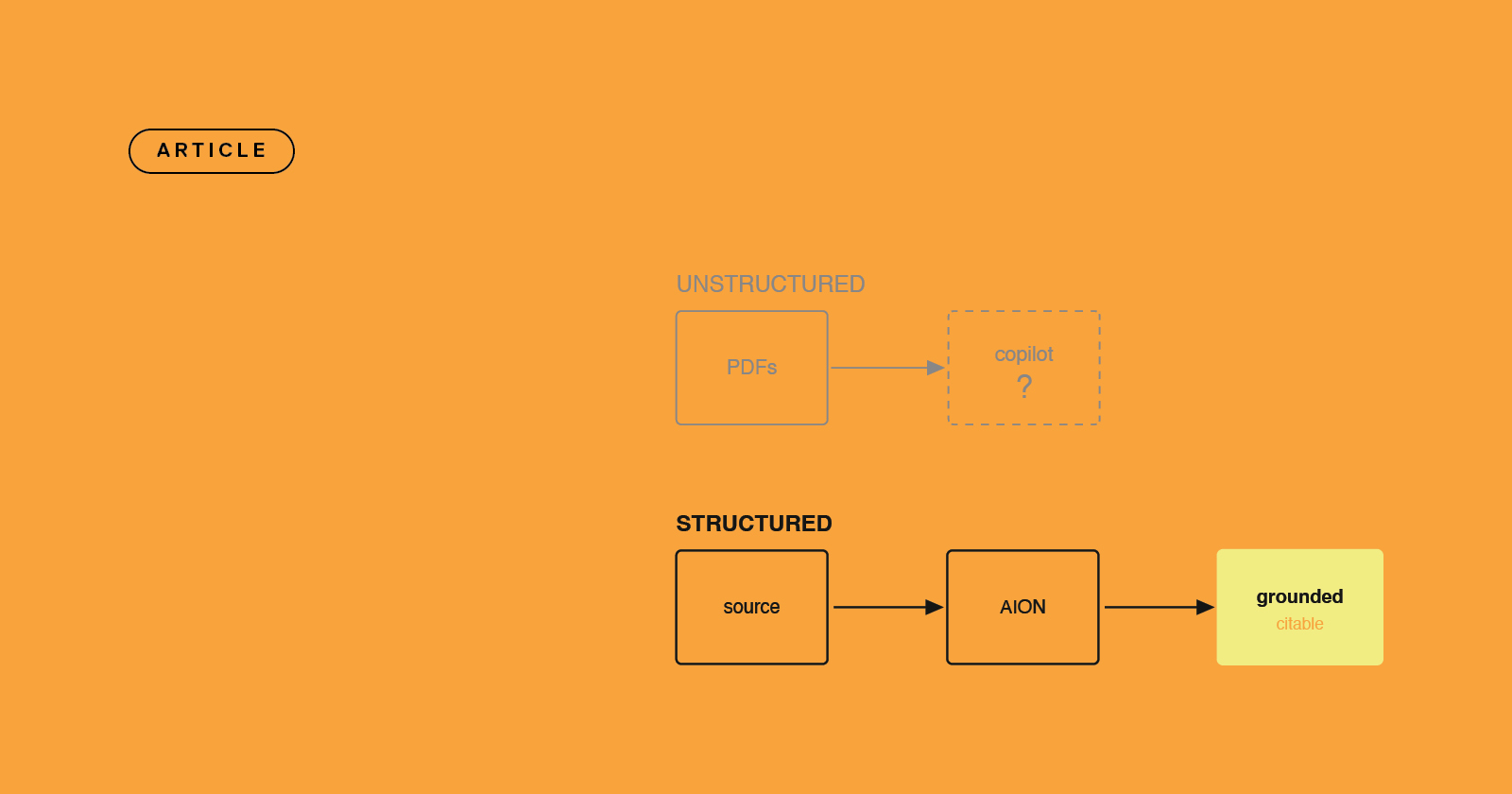
AI-ready HVAC documentation turns unstructured PDFs into structured, governed content field service copilots can cite - no more confident, unverifiable answers.