Guide
How to write documentation AI agents can use

Summary:
An AI agent - a system that doesn't just answer questions but takes actions - is only as reliable as the documentation it draws on. An agent has to retrieve the right unit of content, trust that it's approved and current, get the right variant for the situation, and trace its answer back to a source. Unstructured documentation fails every one of those. This guide covers what agents actually need from your content and how structured, single-source content delivers it. Author-it's AION output gives an agent's retrieval layer clean, governed JSON to work from.
What an AI agent actually does with your documentation
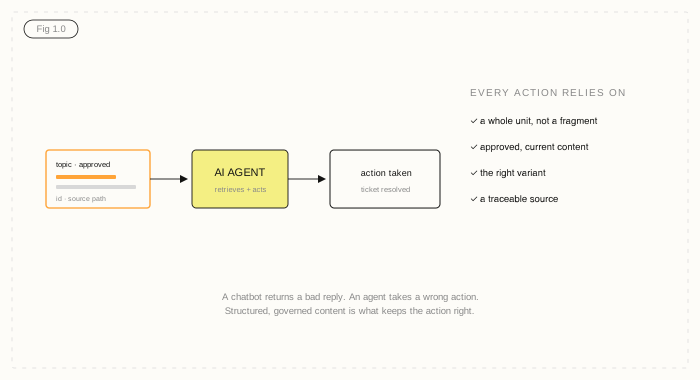
A chatbot answers a question. An agent does something with the answer - it triggers a workflow, fills a form, guides a repair, resolves a ticket end to end. It chains steps, and each step often depends on retrieving something from your content and acting on it.
That raises the bar. A wrong answer from a chatbot is a bad reply. A wrong retrieval inside an agent is a wrong action. If you're weighing up an agent project, it's worth grounding it first in what an AI content foundation is, because the content layer is where these projects usually succeed or fail. Under the hood, an agent still retrieves from your content the way any RAG system does - so the requirements below are really requirements on your documentation.
Requirement 1: retrieve a whole unit, not a fragment
An agent needs a complete, self-contained answer - a whole procedure, not three paragraphs sliced out of a manual. Content authored as discrete topics gives retrieval a clean unit to return. Content trapped in long documents gets chopped into arbitrary fragments, and the agent acts on a fragment. If you're building the retrieval layer, our engineer's guide to structuring documentation for RAG goes deeper on the how.
Requirement 2: only ever see approved, current content
An agent can't tell a draft from an approved procedure, or last year's spec from this year's, unless the content layer makes that distinction for it. Left to guess, it will sometimes act on the wrong one. The fix is governance at the source: one authoritative version of each fact, and a gate so unapproved content is never published to the agent in the first place. Then there's nothing wrong for it to retrieve.
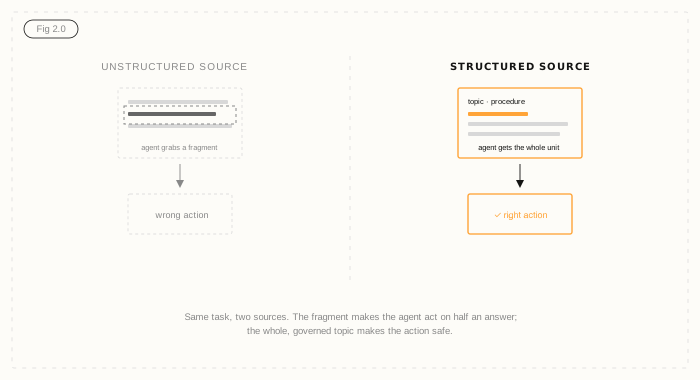
Requirement 3: get the right variant for the situation
The right answer often depends on context - which product, market, or model the agent is dealing with. If your content mixes all the variants together in prose, the agent has to untangle them, and it won't always get it right. Structured authoring handles this by resolving conditional content and variables before publishing, so the agent receives the version that applies, with values already filled in rather than left as placeholders.
Requirement 4: trace every answer to a source
When an agent acts, you need to know what it acted on. That means every unit of content should carry provenance - an identifier and a source path that says exactly where it came from. Unstructured exports strip that away and leave you with anonymous text. Structured content keeps the identifiers attached, so an agent's action can be traced back to the specific approved source behind it.
Where Author-it fits
Author-it produces content that meets these requirements as a matter of course. Content is authored as reusable components in a single library, reviewed and approved through a built-in workflow, with variants and variables resolved at publish time.
For agents, the relevant output is AION, Author-it's structured JSON. It gives an agent's retrieval layer whole topics with metadata, hierarchy, source paths, and resolved values - and because of the publishing gate, only approved content is ever in it. The agent works from content that is complete, current, contextual, and traceable, which is exactly what makes its actions trustworthy.

AI Agents FAQ
Q: What documentation do AI agents need?
A: Agents need documentation that returns a whole, self-contained unit rather than a fragment, that is approved and current, that resolves to the right variant for the situation, and that carries provenance so an action can be traced to its source. In practice that means structured, governed, single-source content in a machine-readable format, not unstructured PDFs or wiki pages.
Q: How is documentation for AI agents different from documentation for people?
A: People can skim a long document, ignore the irrelevant parts, and judge whether something looks current. An agent can't - it retrieves and acts. So the content has to do that work up front: discrete topics, metadata, resolved variants, and governance that guarantees only approved, current content is available. The bar is higher because the agent takes actions, not just reads.
Q: Why do AI agents give unreliable answers from our docs?
A: Usually because the source content is unstructured and ungoverned. The agent retrieves a fragment, or an old version, or the wrong variant, and acts on it confidently. It isn't the model failing - it's the content layer handing the agent something ambiguous. Structuring and governing the content at the source is what makes the agent's actions reliable.
Q: Do AI agents need structured content?
A: Yes. Structured content gives an agent whole retrievable units, metadata to filter on, resolved variants, and provenance to trace actions - none of which unstructured documents provide. Without it, the agent is guessing from prose, and its actions inherit every ambiguity in the source. Structured, single-source content is effectively a prerequisite for reliable agents.
Q: How does Author-it's AION help AI agents?
A: AION is Author-it's structured JSON output built for LLMs, RAG pipelines, and AI agents. It supplies whole topics with metadata, hierarchy, source paths, and resolved variables, and because content must pass a publishing gate, only approved content reaches it. An agent's retrieval layer gets clean, governed, traceable content instead of raw document exports.
Q: What is the difference between an AI agent and a chatbot?
A: A chatbot answers questions. An agent takes actions - it chains steps, triggers workflows, and completes tasks, often retrieving from your content at each step. Because an agent acts rather than just replies, a wrong retrieval becomes a wrong action, which is why the quality and governance of the underlying content matters even more for agents.
Published on:
Author:
June 23, 2026
Jamie Simmonds
Documentation Manager
Related Resources

Article
AI service assistants for manufacturing field techs
What it takes to put an AI service assistant in a manufacturing field tech's hands without risking a wrong, outdated, or unsafe answer.
Article
AI-ready HVAC documentation for field service copilots
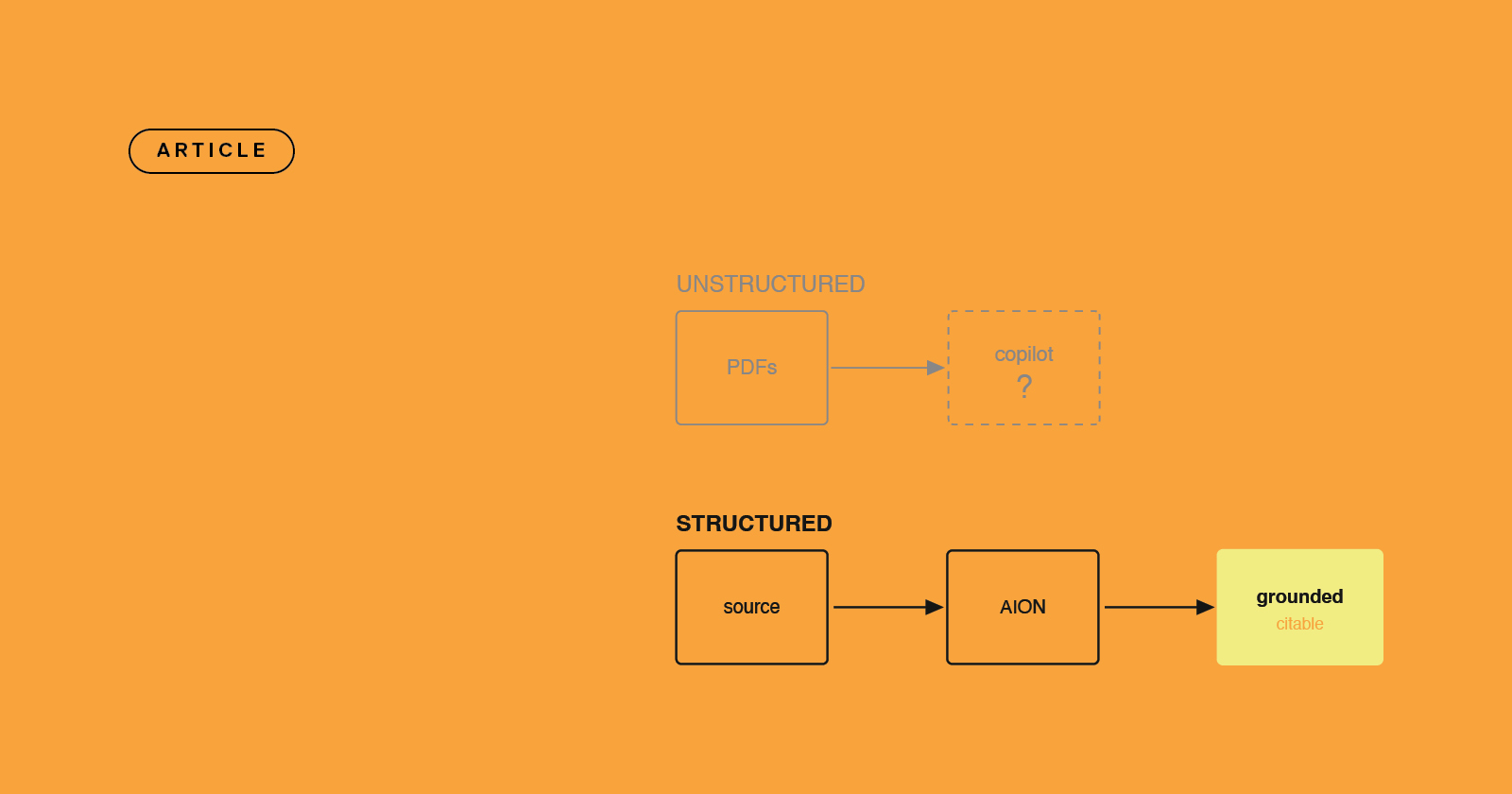
AI-ready HVAC documentation turns unstructured PDFs into structured, governed content field service copilots can cite - no more confident, unverifiable answers.
Article
Product documentation for AI customer support
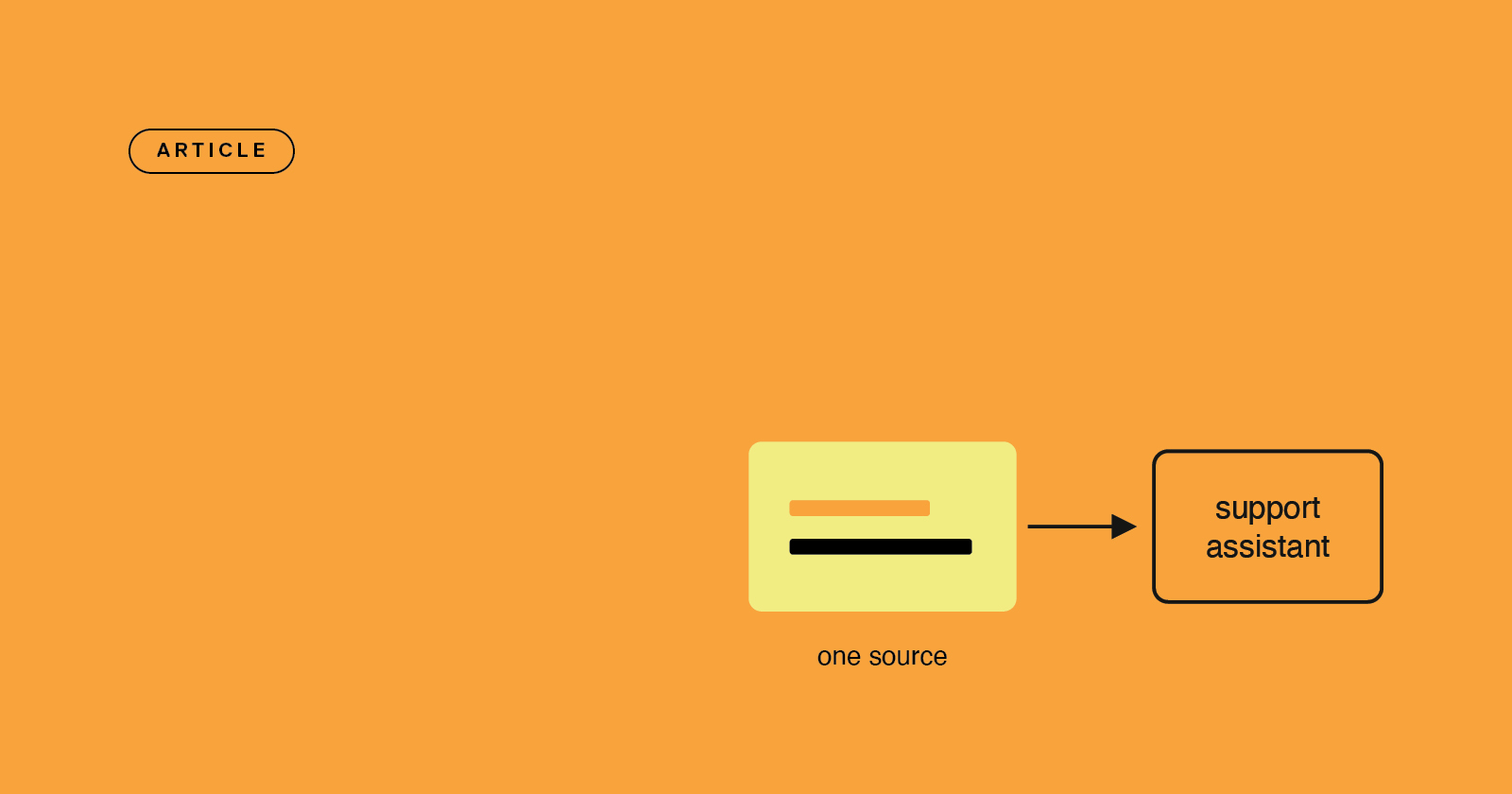
The problem usually isn't your support AI. It's the content you're feeding it.