Article
EU Machinery Regulation 2027: documentation guide

Summary:
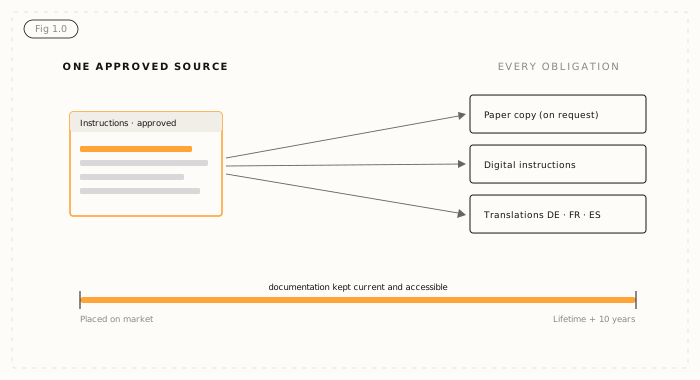
The EU Machinery Regulation (EU) 2023/1230 applies from 20 January 2027 and replaces the old Machinery Directive for machinery sold in the EU. For technical documentation, it means a few concrete things. You still need a technical file and an EU declaration of conformity, plus instructions for use that cover safe installation, operation, and maintenance. For the first time, those instructions can be supplied digitally rather than only on paper, as long as users can access and download them, and can still request a paper copy. The instructions, declaration, and safety information must be provided in the language of the country where the machine is sold. And the documentation has to stay available and accurate for the life of the product plus at least ten years. In short, the Regulation turns technical documentation from a launch-day deliverable into a controlled record you maintain, translate, and keep accessible for well over a decade.
What changes on 20 January 2027
The EU Machinery Regulation (EU) 2023/1230 replaces the Machinery Directive (2006/42/EC). The headline for documentation teams is the change in legal form: a Regulation applies directly in every member state, so there's no national version to track - the rules are the same across the EU.
Three changes matter most for documentation. Digital instructions for use are now explicitly allowed. Language obligations are spelled out for every market you sell into. And records must stay accessible far longer than most teams plan for.
None of this is exotic. It's the kind of change that's easy to underestimate until you count how many manuals, languages, and product variants it touches.
If you want to size the effort before you commit budget, it helps to put numbers on your current documentation cost first.
The documentation obligations in plain English
Strip away the legal language and the Regulation asks for four things you can plan around.
A technical file that shows how the machine meets the essential health and safety requirements. An EU declaration of conformity. Instructions for use covering safe installation, operation, maintenance, and decommissioning. And translations of all of the above into the language of each country where the machine is sold.
Here's how the documentation picture shifts from the Directive to the Regulation:
Why a one-off translation project won't survive
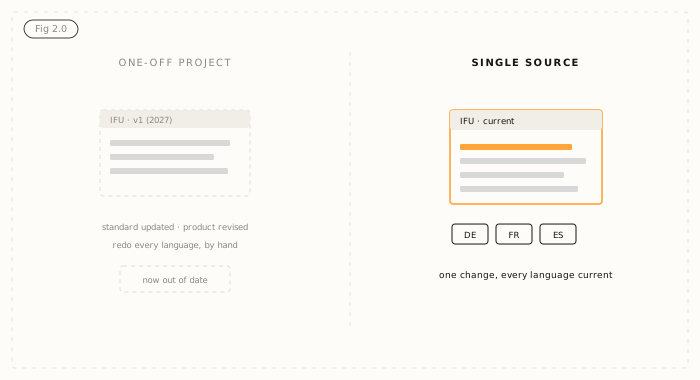
The obvious plan is to treat 2027 as a deadline: translate the technical file, the declaration, and the instructions, ship them, and move on. That plan breaks the first time anything changes.
Over a decade, standards get updated, products get revised, and new markets get added. Each change ripples through every affected manual, in every language. If your content lives in separate design files, a project you scoped once has to be re-run by hand every time - and the retention clock keeps running the whole time.
The Regulation doesn't just ask you to produce documentation. It asks you to keep it correct and accessible for years. That's a maintenance problem, not a project.
What a maintainable setup looks like
The teams that will handle this comfortably share a pattern. Their content lives in one place, structured as reusable components rather than trapped in page layouts.
Structured authoring lets a warning or a procedure exist once and be reused across every manual that needs it. Content reuse means a change is made in one place and flows to every output. Translation only touches what actually changed, so re-translation across markets stays affordable. And because every output is generated from approved content, you can show which version went out, when, and in which language.
Digital delivery fits this model naturally: the same structured source publishes to a downloadable manual, an online help page, or a QR-linked page on the machine - kept current from one source.
Where Author-it fits
To be clear: no software makes you compliant with the Machinery Regulation. Compliance depends on your product, your risk assessment, and your processes. What a Component Content Management System (CCMS) gives you is the document control underneath - and that's where most of the pain actually is.
Author-it has spent 25+ years managing documentation for regulated manufacturers. Content lives as single-source components with version history and a review and approval trail. Translations reuse what hasn't changed. Every output - paper, PDF, or digital instructions - is built from approved content, and stays maintainable for the decade-plus the Regulation expects. Structured content also publishes cleanly to AI-ready output via AION, so the same source is ready for search and assistant tools later.
A practical starting point is to see how ready your current content is. The Structured Content Challenge is a quick way to benchmark where you stand before 2027.

Machinery Regulation FAQ
Q: When does the EU Machinery Regulation apply?
A: From 20 January 2027 it fully replaces the Machinery Directive (2006/42/EC). Machines placed on the EU market from that date must meet the new Regulation. As a Regulation it applies directly in every member state, without national transposition, so the rules are the same across the EU.
Q: Can we provide instructions digitally instead of on paper?
A: Yes. For the first time the Regulation allows instructions for use to be supplied in digital form, provided users can find, access, and download them, and you tell them how. On request, a paper copy must still be available free of charge. The digital version has to stay accessible for the product's expected lifetime plus at least ten years.
Q: What languages does the documentation need to be in?
A: The instructions for use, the EU declaration of conformity, and safety information must be provided in a language easily understood by users in the country where the machine is sold - in practice, the official language or languages of each market. This multiplies the translation workload for manufacturers selling across the EU.
Q: How long do we have to keep the documentation?
A: The technical file and related records must stay available to authorities for at least ten years after the machine is placed on the market, and digital instructions must remain accessible for the product's lifetime plus ten years. For long-lived industrial machinery, that can mean maintaining accurate documentation for decades.
Q: Does a CCMS make us compliant with the Machinery Regulation?
A: No tool makes you compliant on its own - compliance depends on your product, your assessment, and your processes. What a CCMS does is give you the document control underneath: a single source for each instruction and warning, version history, approval records, and the ability to update and re-translate content quickly and keep every output accessible. It makes meeting and evidencing the documentation obligations far more manageable.
Q: We only sell a few machines a year - does this still apply?
A: Yes. The Regulation applies to machinery placed on the EU market regardless of volume. Smaller manufacturers often feel the documentation burden more, because the same technical file, declaration, translation, and retention obligations apply with a smaller team to manage them.
Q: What should we do first?
A: Start by mapping what documentation each product needs, which markets and languages it covers, and where that content currently lives. If it is scattered across design files and drives, consolidating it into a single, structured source is the step that makes translation, updates, and long-term retention practical before the 2027 deadline.
Published on:
Author:
July 14, 2026
Adrian Winks
CEO
Related Resources
Article
Field crew AI: when a wrong answer is a safety risk
Why safety-critical field operations can't run AI on ungoverned content - and what deterministic, traceable answers actually require.
Article
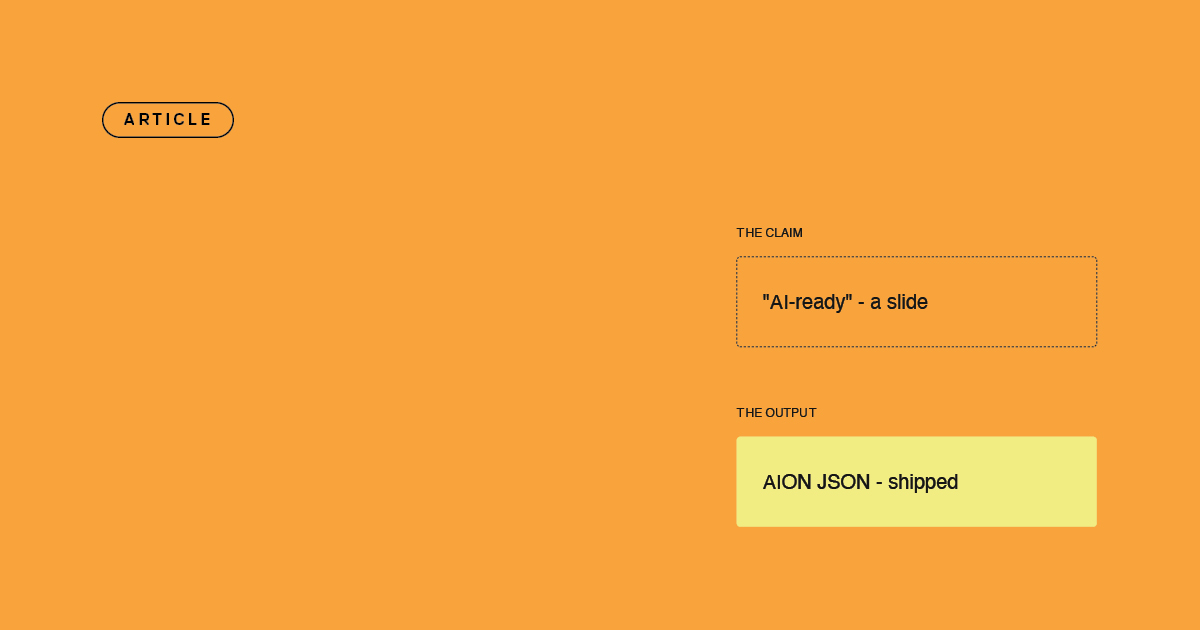
AI-ready content: who has actually shipped it?
A practical field guide to separating AI-ready content marketing from vendors who have actually shipped a structured, governed output for AI.
Article
Future-proof your content for an AI stack that changes
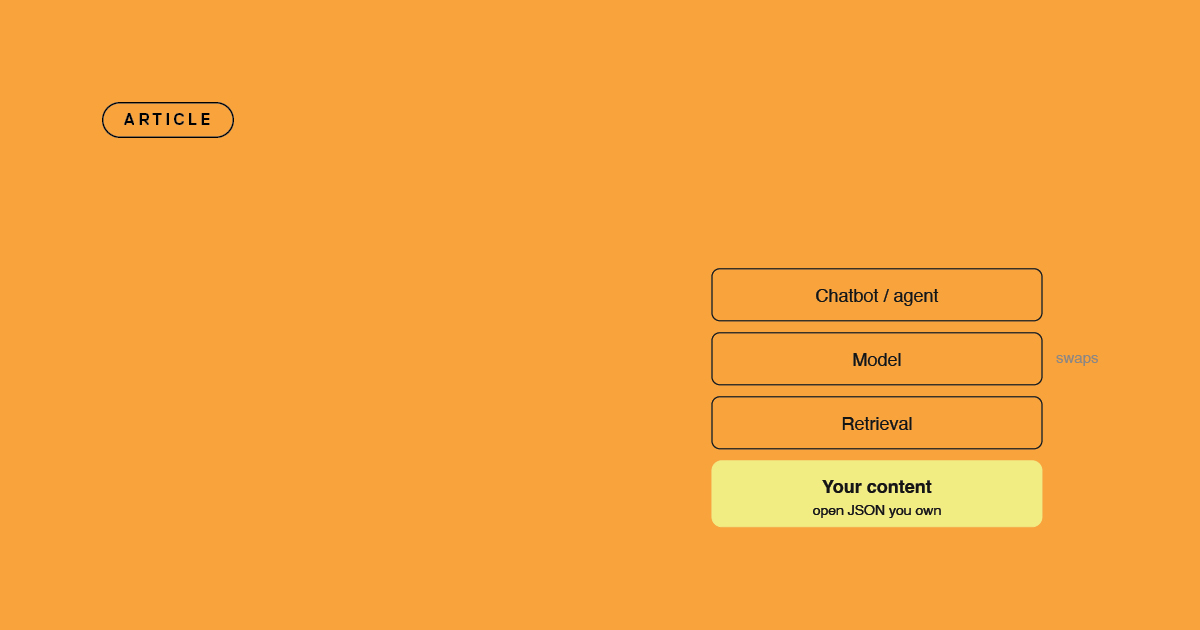
Models and tools churn constantly. Future-proof content for AI by owning the one layer that lasts - your content, as open structured JSON.