Article
Best CMS for RAG in regulated industries

Summary:
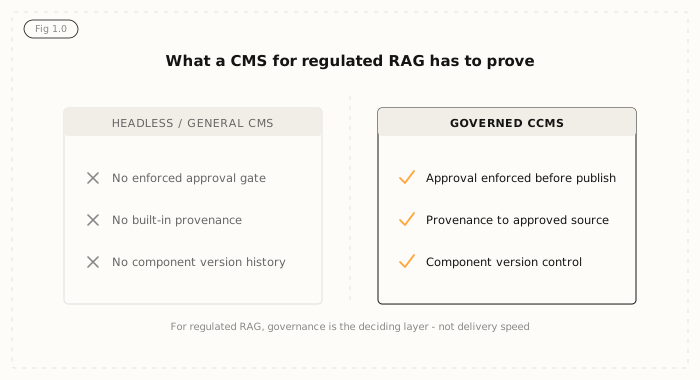
For regulated industries, the best CMS for RAG is not a headless or general-purpose CMS - it is a governed content system that manages approval, provenance, and version control at the component level. RAG is only as accurate as the content it retrieves, and in regulated environments an answer also has to be traceable to an approved, current source. Most platforms that rank for "best CMS for RAG" are built for developer speed and flexible delivery, not for proving where an answer came from or blocking unapproved content. A Component Content Management System (CCMS) closes that gap. Author-it structures content as reusable, versioned components, enforces approval before anything publishes, and ships AION structured JSON output built for LLM and RAG ingestion - so retrieval draws on approved content with provenance intact. For regulated RAG, governance is the feature that matters most.
Why "best CMS for RAG" searches point the wrong way for regulated teams
Search "best CMS for RAG" or "headless CMS for AI" and you get a familiar list: fast, API-first, developer-friendly platforms. They are genuinely good at flexible content delivery. But the list quietly assumes one thing - that any content you feed the pipeline is fine to serve.
In a regulated industry, that assumption is the risk. It is not enough for a RAG answer to be relevant. It has to be traceable to an approved, current source, and unapproved or outdated content must never reach retrieval in the first place. That is a governance problem, and it is exactly what the popular answers leave out.
So for regulated teams the question is sharper: which content source gives RAG accuracy and provenance, not just delivery speed? We dig into that trade-off in CCMS vs headless CMS.
What RAG actually needs from a content source
Retrieval-augmented generation grounds a model's answers in retrieved content instead of relying on training data alone. Its accuracy depends almost entirely on the quality and structure of that content. Three things matter most.
Structure - content broken into clean, self-contained components chunks predictably and retrieves accurately. Wall-of-text documents chunk badly and pull in the wrong context.
Currency - retrieval must draw on the current version, not a stale copy sitting in a file share.
Provenance - every retrieved passage should trace back to a known, approved source, so an answer can be verified rather than trusted blindly.
Delivery speed is table stakes. For regulated RAG, structure, currency, and provenance are the deciders.
Where headless and general CMS platforms fall short for regulated RAG
Headless and API-first content platforms are built for developer speed and flexible delivery. That is their strength, and for marketing sites and apps it is often the right tool. For regulated RAG, three gaps show up.
Approval state - most general-purpose platforms treat publishing as a switch, not a gate. There is often nothing architectural stopping unapproved content from being served to a pipeline.
Provenance - content is delivered as flexible payloads, but the approved-source lineage an auditor or a regulated answer needs is not built in.
Version governance - developer-oriented platforms version code and schemas well, but component-level content approval history - who approved this procedure, and when - is usually not their job.
None of this makes them bad platforms. It makes them the wrong layer for content that has to be provably correct.
What a governed content source adds

A Component Content Management System approaches the problem from the governance end. Content lives as structured, reusable components with a full lifecycle: draft, in review, approved, published. Approval is enforced before anything publishes, and every component carries a version history and audit trail.
For RAG, that changes what retrieval can draw on. The pipeline sees approved, current, structured content, and every retrieved passage traces back to a known source. You get the accuracy benefits of structure and the trust benefits of governance in the same layer - which is also why RAG pipelines fail on enterprise documentation when the source content is unstructured and ungoverned.
Author-it and AION for regulated RAG
This is where Author-it fits. Author-it has managed structured content for regulated industries for over 25 years - manufacturing, utilities, software - where content accuracy is a compliance requirement, not a preference.
Its AI output format, AION, is structured JSON built for LLM and RAG ingestion: content hierarchy, resolved variables, authorship, and timestamps. Because of the publishing gate, only approved content reaches AION - so retrieval is grounded in content that has passed review. The result is the same structured, governed content layer feeding every AI project, which is the core of Author-it's AI content foundation approach.
How to choose a CMS for RAG in a regulated industry
Run any platform through five questions.
- Does it manage content as structured components, or just whole documents and flexible payloads?
- Can unapproved content reach the pipeline, or is approval enforced before anything is served?
- Does every retrieved passage trace back to an approved, current source?
- Is there component-level version history and an audit trail?
- Does it ship structured, AI-ready output today, or is it on a roadmap?
If a platform answers the first four with "it depends how you configure it", it is a delivery tool, not a governed source. For the build-side detail, see our engineering guide to structuring docs for RAG. For regulated content, choose the layer that makes provenance the default.

RAG CMS FAQ
Q: What is the best CMS for RAG in regulated industries?
A: For regulated industries, the best CMS for RAG is a governed content system - a Component Content Management System (CCMS) - not a headless or general-purpose CMS. It manages content as structured components, enforces approval before publishing, keeps version history and provenance, and ships structured AI-ready output. That gives RAG both retrieval accuracy and the traceability regulated answers require.
Q: Can a headless CMS be used for RAG?
A: Yes, and many teams do for unregulated content, because headless platforms deliver content flexibly over APIs. The limitation for regulated RAG is governance: most headless platforms do not enforce approval before content is served, and they do not build in the approved-source provenance and component-level version history that a regulated answer needs.
Q: Why does RAG give wrong answers, and how does content fix it?
A: RAG usually gives wrong answers because of the source content, not the model. Unstructured, outdated, or ungoverned content chunks badly and retrieves the wrong context. Structuring content into clean components, keeping only current approved versions, and preserving provenance fixes most retrieval failures at the source.
Q: What makes a CMS "AI-ready" for RAG?
A: An AI-ready CMS produces structured output an LLM or RAG pipeline can ingest directly - clean components, resolved variables, and metadata - and guarantees that only approved content reaches that output. Author-it's AION format ships structured JSON built for LLM and RAG ingestion, drawn only from approved content.
Q: Is a CCMS better than a headless CMS for RAG?
A: For regulated content, usually yes. A CCMS adds what headless platforms leave out for this use case: enforced approval, component-level version control, and provenance, alongside structured output. For unregulated marketing or app content where governance is not the priority, a headless CMS may be the better fit.
Q: How does AION support RAG pipelines?
A: AION is Author-it's structured JSON output for LLM and RAG ingestion. It carries content hierarchy, resolved variables, authorship, and timestamps, and because of Author-it's publishing gate, only approved content is included. Retrieval then draws on structured, current, approved content with provenance intact.
Q: What content structure works best for RAG retrieval?
A: Content broken into small, self-contained components - each covering one concept, procedure, or fact - retrieves most accurately, because it chunks cleanly and preserves context. Long, mixed documents chunk unpredictably and pull irrelevant passages, which is a common cause of wrong RAG answers.
Published on:
Author:
July 15, 2026
Osmar Silva
CTO
Related Resources

Article
Field crew AI: when a wrong answer is a safety risk
Why safety-critical field operations can't run AI on ungoverned content - and what deterministic, traceable answers actually require.
Article
AI-ready content: who has actually shipped it?
A practical field guide to separating AI-ready content marketing from vendors who have actually shipped a structured, governed output for AI.
Article
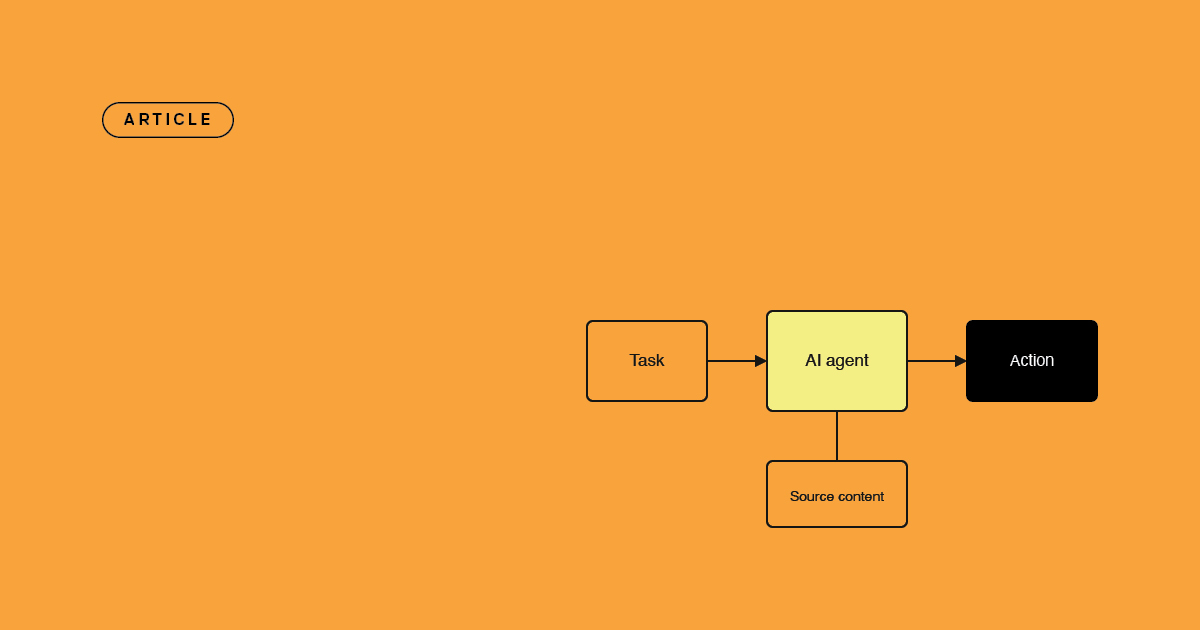
Agentic AI for documentation: a practical guide
How AI agents use documentation to take action - and why agentic AI raises the bar on structured, governed content.