AI-ready ccms vs traditional ccms
Most CCMSs publish documents. Author-it publishes data your AI can use.
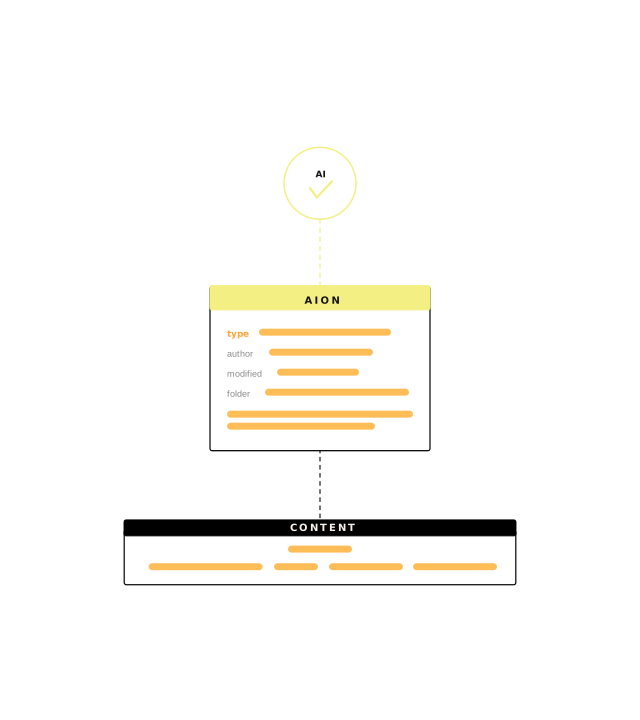
AI doesn't read PDFs. It reads structured data. There's a gap between what most content tools output and what your AI actually needs - and it shows up as hallucinations, missed context, and answers you can't audit.
Author-it closes that gap. Here's how the two approaches compare - and why the architecture you choose now determines the quality of every AI answer your organisation produces.
The gap
A PDF export is not an AI content strategy.
Every CCMS can export a PDF. Most produce HTML. These formats were built for one purpose: delivering content to a human reader. They were never designed for what your AI actually needs.
When an LLM or RAG pipeline ingests a PDF, it receives stripped text - no content type, no provenance, no hierarchy. The context it needs to answer accurately is gone. The problem isn't the model. It's the format.
SIDE BY SIDE
What your AI actually receives
Eight dimensions. The gap compounds at every one.
FIVE DIFFERENCES
Five differences that change what your AI can do
Each one compounds. Together, they're the reason two organisations with similar content can get dramatically different AI results.
WHAT AI NEEDS
Documents end where AI needs to begin.
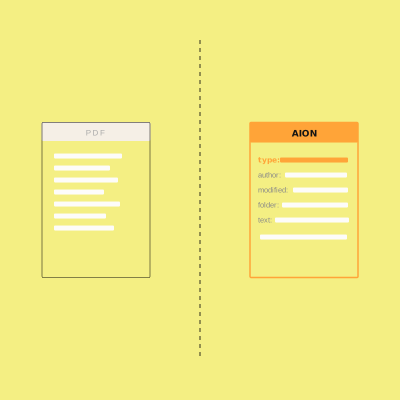
A PDF is a rendering instruction for a human reader. When an AI ingests it, the rendering is stripped and what remains is text - no type, no structure, no provenance. AION is the opposite: structured JSON designed for machine parsing, not screen layout. The hierarchy is preserved. Every topic is typed. The AI receives data, not a document.
DATA CHUNKING
Arbitrary chunks produce unpredictable answers.
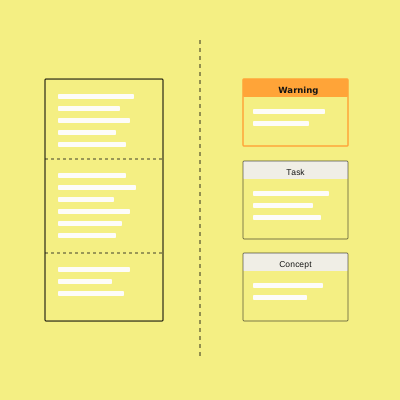
RAG systems split PDF content at arbitrary boundaries - page breaks, paragraph limits, character counts. A procedure gets split mid-step. A warning ends up sharing a chunk with an unrelated product note. AION delivers content pre-chunked at the topic level: each chunk is a discrete, typed unit bounded by the authoring structure, not a character count. Better chunks produce better embeddings. Better embeddings produce more accurate retrieval.
METADATA
The AI is working blind without metadata.
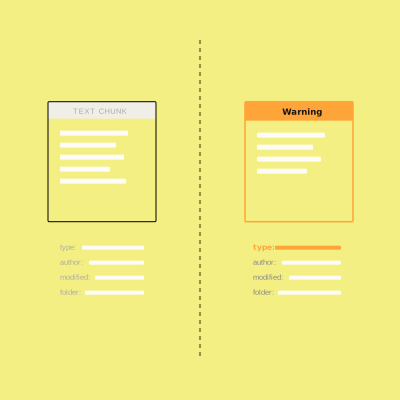
A PDF scrape delivers text. Maybe a filename. The AI has no idea what type of content it's reading, who wrote it, when it was last changed, or where it sits in your content structure. Every AION topic carries template type, authorship, last-modified date, folder path, topic ID, and resolved variable values - automatically, without author configuration. Context alongside text is what produces accurate, citable answers.
AI CONTENT GOVERNANCE
Your AI should only know what's been approved.
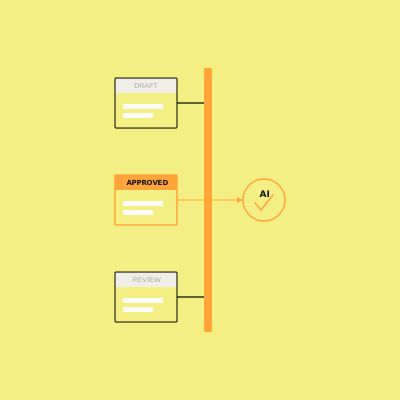
In document-centric workflows there is no gate between in-progress content and what the AI ingests - drafts, superseded procedures, and expired versions can all reach the AI. AION is a publishing target. Content must go through Author-it's publishing workflow before it reaches the AI. The same governance that controls what goes into your PDF controls what goes into your AI.
SINGLE SOURCE
Stale content in. Stale answers out.
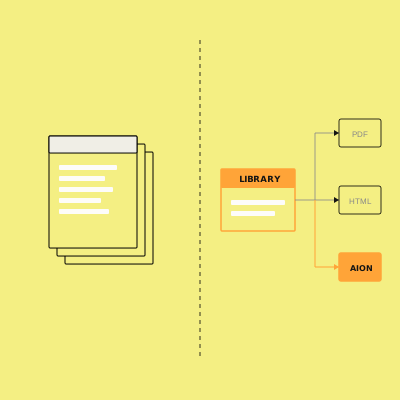
AI knowledge bases built from document exports go stale the moment content changes. When a procedure is updated, the AI doesn't know - until someone remembers to re-export. The Author-it Library is the single source. When content changes, you republish to AION. The same single-source architecture that keeps your PDF current keeps your AI current - because both come from the same governed library.
AION IN ACTION
This is what AI-ready actually looks like.
Both blocks below contain the same sentence. One comes from a PDF export. One comes from Author-it AION.
The AI context on the left has words. The AI context on the right has words plus the context it needs to answer accurately: what type of content this is, who wrote it, when it was last changed, which product it applies to, and where it sits in the content structure.
That difference - repeated across every chunk in your knowledge base - is what separates AI answers you can trust from answers you have to check.
"Do not operate this equipment without proper training. See section 4.2 for installation requirements. ProSeries 400 voltage specifications require a licensed electrician..."
[end of chunk]
type: unknown
author: unknown
modified: unknown
context:unknown
{
  "TopicId": "TPC-00421",
  "Template": { "Name": "Warning", "Type": "safety" },
  "LastModified": { "On": "2026-03-14", "By": "J. Simmonds" },
  "Folder": "/Manufacturing/Safety/EU",
  "Description": "High voltage warning — ProSeries 400",
  "VariablesValues": [
    { "Name": "ProductName", "Value": "ProSeries 400" }
  ],
  "Text": "Do not operate this equipment without..."
}
What your ai gets from a pdf
What your ai gets from AION
AI - Traditional CCMS vs Author-it FAQ
A traditional CCMS manages structured authoring and typically publishes to PDF, HTML, and DOCX - formats designed for human readers. An AI-ready CCMS extends that foundation to publish structured data formats that AI systems can consume directly, with content type information, metadata, and hierarchy preserved in the output. Author-it's AION output is the example: it publishes structured JSON from the same content library that produces PDF and HTML, providing AI systems with typed, metadata-annotated, component-level data rather than formatted documents.
You can - but the quality of AI output will be limited. When an AI or RAG system ingests a PDF, it receives stripped text. Content type information is lost (the AI can't distinguish a safety warning from a feature description). Hierarchy is lost (the AI doesn't know a section belongs to a sub-procedure). Metadata is lost - no authorship, no modification date, no version. Chunks are created at arbitrary paragraph or page boundaries rather than meaningful topic boundaries. All of this reduces retrieval precision and increases the likelihood of inaccurate, decontextualised answers.
AION includes the following on every published topic: the template name and type (which defines the content type - task, warning, concept, and so on), the topic ID and book ID, the library folder path, the last-modified timestamp and the name of the author who made the last change, the topic description, and all variable values resolved at publish time (such as product name, region, or version). This metadata travels with every content chunk, giving AI systems the context they need to deliver accurate, citable answers.
Retrieval-augmented generation (RAG) works by retrieving the most relevant text chunks from a knowledge base and passing them to an LLM to generate an answer. When content is chunked from a PDF at arbitrary paragraph or page boundaries, the retrieved chunks may contain unrelated content, split mid-procedure, or lose the context that gives them meaning. AION chunks content at the topic level - each chunk is a discrete, typed, metadata-annotated unit authored as a single coherent piece. These chunks produce more precise vector embeddings, which produce more accurate retrieval, which produces better LLM answers.
AION is a publishing output, not a live scrape or continuous sync. Content must go through Author-it's standard publishing workflow to reach AION output. In organisations using Author-it's Review and Approvals module, only approved content can be published. Draft, in-review, or expired content stays within the authoring environment and does not appear in AION output until it has been approved and published. This means the same governance that controls what goes into a PDF controls what goes into your AI.
In a document-centric approach, content is created and managed as whole documents: Word files, PDFs, web pages. When those documents are fed to an AI system, the AI receives the final rendered output: text without structure, context, or type information. In a component-centric approach, as used by Author-it, content is authored as discrete topics, individual units with defined types and metadata. These components are assembled into documents for human readers and published as structured data for machines. The AI receives components, not documents: smaller, typed, metadata-annotated units that produce more precise retrieval and more reliable answers. The practical consequence is retrieval precision. A document-centric system asks the AI to find the right sentence inside a 40-page manual it only sees as flat text. A component-centric system hands the AI the individual topic, already labelled with what it is and where it belongs. The AI spends its effort answering the question, not reconstructing structure the source threw away.
No. Any book already in the Author-it Library can be published to AION without restructuring. A Library Administrator creates an AION publishing profile once - selecting Resolved XML format and adding the JSON conversion step - and from then on, any author can publish to AION by selecting that profile. Organisations that want to improve AI output quality can do so by improving their library design (better topic typing, richer metadata, cleaner variable usage), but this is optimisation, not a prerequisite. Existing structured content works as-is.
Most CCMS platforms currently export to PDF, HTML, DITA XML, or proprietary formats. These outputs are designed for human-facing delivery and require additional processing - scrapers, parsers, or manual conversion pipelines - before they can be used in a RAG or AI workflow. AION is Author-it's dedicated AI output format: structured JSON produced directly from the publishing workflow, with metadata and hierarchy built in. No additional pipeline is required.
Content hierarchy tells the AI how individual pieces of knowledge relate to each other - which topic belongs to which procedure, which procedure belongs to which product area, which product area belongs to which product line. Without hierarchy, an AI retrieving a chunk about torque settings has no way of knowing whether it applies to the ProSeries 300 or the ProSeries 400, or whether it is part of an installation procedure or a maintenance checklist. AION preserves the full book-to-sub-book-to-topic hierarchy, giving the AI the organisational context it needs to distinguish between similar content and answer questions precisely.
Governed AI output means that the content your AI systems receive has passed through the same review, approval, and publishing controls as your other outputs. In Author-it, this means content that has not been approved does not reach AION. Content published to AION carries modification history, authorship, and content type - so answers produced from it can be audited back to a specific approved component. For regulated industries where hallucinations are a compliance event, governed AI output is the difference between an AI tool you can trust and one you cannot.
AI Resources
More on AI Content Foundation
Article
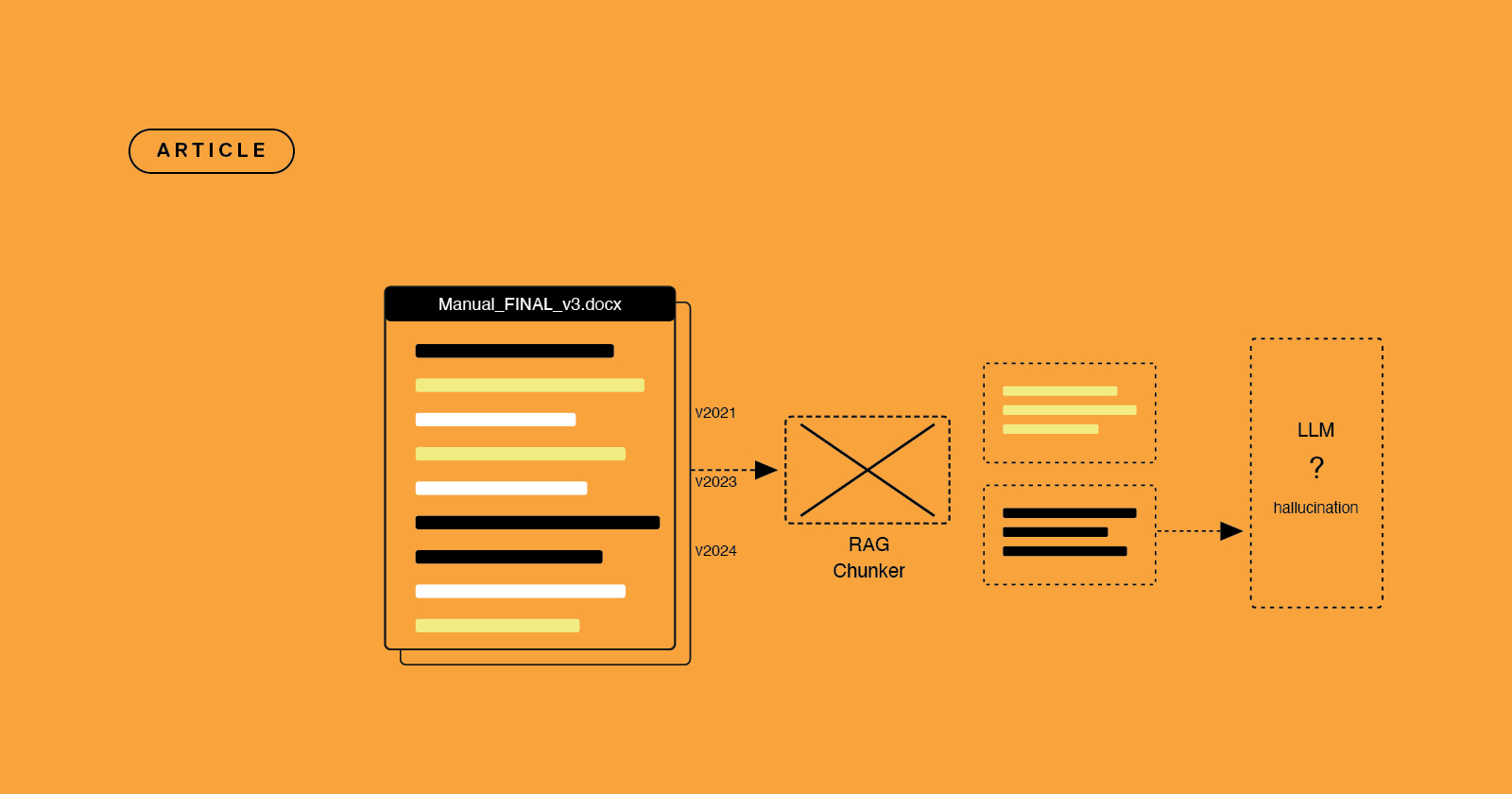
Why RAG pipelines fail on enterprise documentation
Your RAG pipeline keeps hallucinating. The model is fine. The problem is the content feeding it - and structured content is the fix.

Article
Structured content for AI: how LLMs read your documentation
Structured content is not just good documentation practice - it is what makes AI systems retrieve accurately instead of hallucinate.
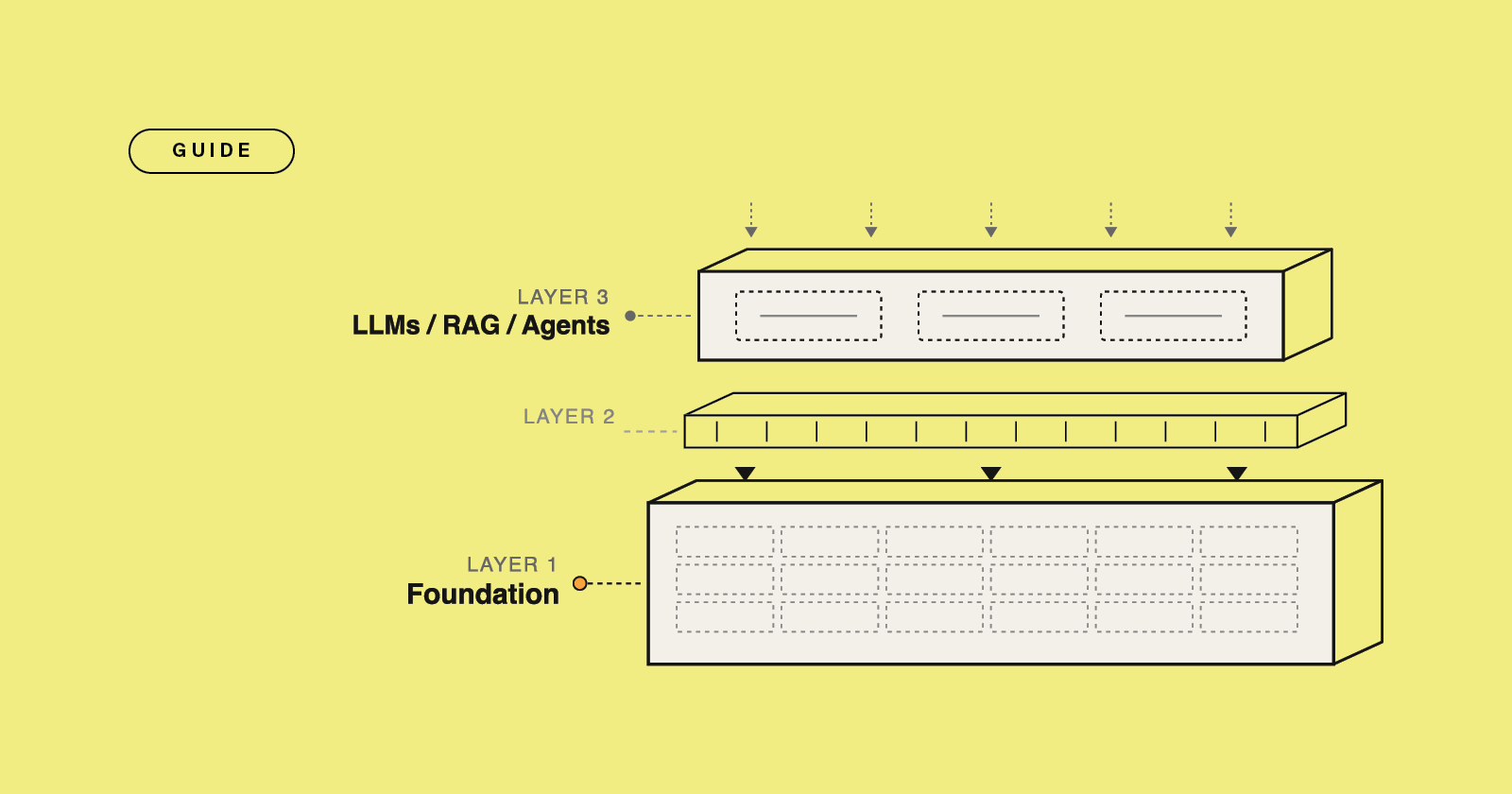
Guide
AI content foundation guide: what your LLMs actually need
Your LLMs and AI agents are only as accurate as the content underneath. Here is the foundation most enterprises skip - and how to audit yours.
Precise. accurate. compliant.
Make content your competitive advantage. And your AI’s source of truth.
Discover how Author-it helps your team reduce errors, accelerate workflows, and deliver accurate, compliant content at scale, and feed every AI you build with a source it can trust.