Article
The true cost of an ISO non-conformance in manufacturing

Why it matters:
Most quality managers can quote the certification body fee for a re-audit. Almost none have calculated the total cost of a major non-conformance, including production and customer impact.
Summary:
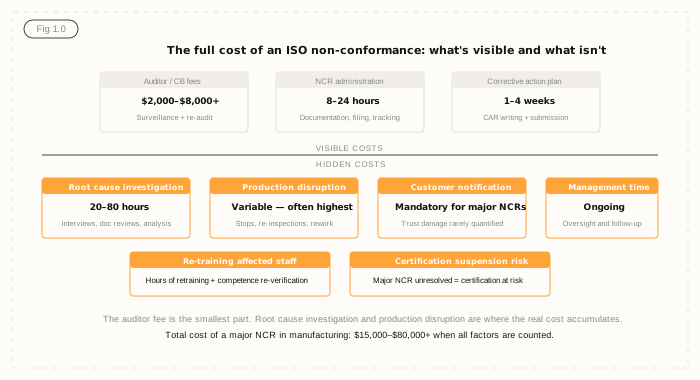
Ask a quality manager what an ISO non-conformance costs and the answer usually comes back as the re-audit fee. That number is real, but it's also the smallest component of the total cost. The root cause investigation, the corrective action plan, the production disruption, the customer notification requirement for major NCRs, the re-training, and the management time absorbed over months of remediation - those are the numbers that should be in the business case for better document control. Most organisations have never added them up.
What the certification body fee actually covers
When an auditor raises a non-conformance, the immediate visible cost is the certification body's additional fees. For a surveillance audit that identifies a major NCR, the CB typically schedules a follow-up visit to verify corrective action closure. That follow-up visit carries its own fee, typically in the range of $2,000 to $8,000 depending on the CB, the number of auditor days required, and the sites covered.
That's the cost most organisations budget for. It's also a relatively small fraction of the total.
The cost of corrective action
Every non-conformance requires a corrective action report. For a minor NCR, this is a documented root cause analysis and a corrective action plan submitted to the CB within a defined timeframe - typically 30 to 90 days. The NCR administration - writing the CAR, coordinating with relevant staff, tracking implementation - takes between 8 and 24 hours of quality team time, depending on complexity.
A major NCR requires more. The root cause investigation for a documentation-related major NCR typically involves reviewing affected documents, interviewing staff who worked with them, tracing the version history, and identifying the point of failure in the control process. For organisations with dispersed teams or multiple sites, this investigation can consume 20 to 80 hours of quality, operations, and management time spread across four to eight weeks.
That time has a cost. For a quality manager at $120,000 per year, 80 hours of investigation time represents approximately $4,600 in salary alone, before accounting for the operational activities that didn't happen while that investigation was taking priority.
Production disruption - the number that's rarely counted
Documentation-related non-conformances often have a direct production impact. If an auditor finds that operators have been working from an outdated procedure - the most common version control finding - the correct response is to suspend the relevant production activity until the documentation is confirmed as current and operators have been re-verified against the correct version.
The duration of that suspension depends on the severity of the finding and how quickly the correct documentation can be produced, verified, and distributed. For an organisation with a well-run manual system, this might take a day. For an organisation where the correct version has to be located, re-approved, and manually distributed to multiple sites, it can take longer.
Production downtime in manufacturing ranges from hundreds to hundreds of thousands of dollars per day depending on the product and process. Even a single day's disruption on a mid-volume production line typically costs more than the CB re-audit fee. For manufacturers supplying automotive, aerospace, or medical device customers under contractual ISO requirements, the customer-facing implications of a documented NCR can include mandatory notification, additional customer audits, and potential supply chain de-listing.
Customer notification requirements
Major NCRs in regulated supply chains often carry mandatory customer notification requirements. If an ISO-certified manufacturer supplies a Tier 1 automotive customer, for example, that customer's supplier quality agreement may require notification of any major non-conformance within a defined timeframe. The customer then has the right to conduct their own audit to verify corrective action.
The customer relationship impact of a major NCR is difficult to quantify but straightforward to understand. A customer who receives a major NCR notification from a supplier begins asking questions about risk. Those questions affect the procurement relationship in ways that outlast the NCR itself.
Staff re-training and competence re-verification
ISO 9001 requires organisations to ensure that staff performing quality-critical activities are competent. When a non-conformance involves staff working from incorrect documentation, that competence is in question. The corrective action typically requires re-training on the correct procedure and re-verification of competence - a formal step that produces evidence that the affected staff have been trained on the current approved version.
For a single production line, this might involve 10 to 30 operators. For a finding that covers multiple sites, the number scales accordingly. Re-training time is a direct cost on top of the investigation and administrative burden. It also temporarily reduces productive capacity while affected staff complete the training.
The total cost model for a major NCR
Pulling these together for a major documentation-related NCR at a mid-sized manufacturing organisation:
CB re-audit fee: $3,000–$6,000. Root cause investigation (40 hours of quality and management time): $3,000–$6,000. CAR writing and NCR administration: $1,000–$2,000. Production disruption (one to two days on a mid-volume line): $10,000–$50,000. Re-training of affected operators (20 operators, two hours each): $2,000–$4,000. Customer notification and relationship management: difficult to quantify, high in long-term impact. Management time over the 90-180 day closure period: ongoing.
Total for a documented major NCR: $15,000 to $80,000 or more, before customer relationship costs. For organisations that have experienced a major NCR, this range tends to feel conservative rather than overstated.
The prevention calculation
Most documentation-related non-conformances - version drift, lost approval trails, silent obsolescence, uncontrolled external documents - are preventable. They're not random events or unpredictable failures. They're the predictable output of document management systems that rely on human discipline to enforce controls that should be architectural.
The business case for a CCMS isn't built on the cost of the certification body fee. It's built on the total cost of the NCRs that the current system predictably produces over a three to five year certification cycle - plus the audit preparation effort that's invisible in the current budget because it's absorbed as normal overhead. The ROI calculator provides a structured way to build that case. The Structured Content Challenge identifies where in the documentation control chain your current risk is highest.

ISO non-conformance cost FAQ
Q: What does an ISO 9001 non-conformance cost?
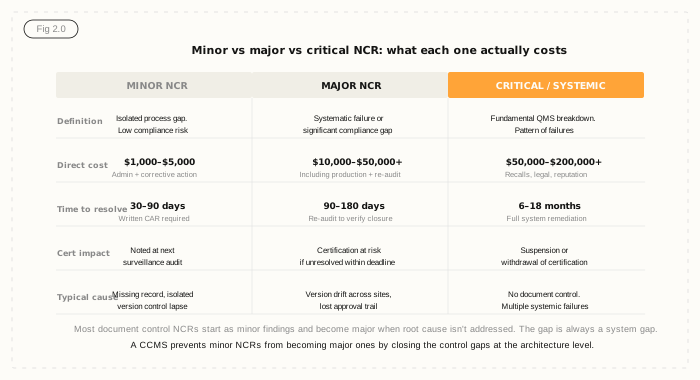
A: The cost of an ISO 9001 non-conformance varies significantly by severity. A minor NCR typically costs $1,000 to $5,000 in direct costs (CB admin fees, corrective action plan writing, NCR tracking). A major NCR costs substantially more: $10,000 to $80,000 or more when all factors are included - re-audit fees, root cause investigation, production disruption, re-training of affected staff, and customer notification where required. The CB re-audit fee is consistently the smallest component. Root cause investigation and production disruption are where the real cost accumulates for most organisations.
Q: What is the difference between a minor and a major ISO non-conformance?
A: A minor non-conformance is an isolated failure to meet a specific ISO 9001 requirement that does not represent a systematic breakdown of the quality management system. It requires a written corrective action response but typically doesn't trigger a re-audit - closure is verified at the next scheduled surveillance visit. A major non-conformance indicates a systematic failure or significant departure from an ISO 9001 requirement - one that puts the integrity of the quality management system at risk. Major NCRs require a corrective action plan submitted within a defined timeframe and a follow-up audit to verify closure. Unresolved major NCRs can result in suspension or withdrawal of certification.
Q: What documentation-related issues most commonly cause ISO non-conformances?
A: The four most common documentation-related ISO non-conformances are: version drift (operators using an outdated procedure version that doesn't match the current approved document in the QMS), lost or unverifiable approval trails (approvals recorded in email rather than the document management system, making them unlocatable under audit), silent obsolescence (superseded document versions remaining accessible in shared systems), and external document control failures (supplier specifications or regulatory standards referenced in the QMS but not formally tracked for changes). All four are preventable through architectural document control rather than manual process discipline.
Q: Does an ISO non-conformance affect certification immediately?
A: A minor NCR does not immediately threaten certification. It is noted at the current audit, a corrective action plan is required, and closure is verified at the next scheduled visit. A major NCR does not immediately withdraw certification, but it triggers a defined corrective action deadline - typically 90 days for submission of the CAR and 180 days for demonstrated closure. If a major NCR is not closed within the required timeframe, the certification body may suspend or withdraw certification. Multiple major NCRs or a pattern of findings without systematic root cause correction typically triggers escalation to suspension review.
Q: How long does it take to close an ISO non-conformance?
A: The timeline for closing an ISO non-conformance depends on severity and root cause complexity. A minor NCR typically closes in 30 to 90 days - root cause analysis, corrective action implementation, and evidence of effectiveness. A major NCR typically takes 90 to 180 days from identification to verified closure, including the follow-up audit. The closure timeline is set by the certification body and is non-negotiable. Organisations that fail to close within the deadline face escalation to suspension review. Documentation-related NCRs that require system changes - rather than just process reminders - typically take longer because the corrective action involves implementing new controls rather than just retraining staff.
Q: Can better document control prevent ISO non-conformances?
A: Yes. The vast majority of documentation-related ISO non-conformances are preventable through architectural document control. Version drift is prevented by single-source publishing - there are no distributed copies to drift. Lost approval trails are prevented by recording approvals in the document management system rather than in email. Silent obsolescence is prevented by a publishing gate that blocks superseded content from remaining accessible. External document control failures are prevented by tracking external references in the content library. These aren't process improvements that depend on human discipline - they're architectural properties that the system enforces automatically. A Component Content Management System provides all four controls as design properties, not as policies that can be forgotten.
Published on:
Author:
March 23, 2026
Quinn Wright
Head of Sales
Related Resources

Article
Field crew AI: when a wrong answer is a safety risk
Why safety-critical field operations can't run AI on ungoverned content - and what deterministic, traceable answers actually require.
Article
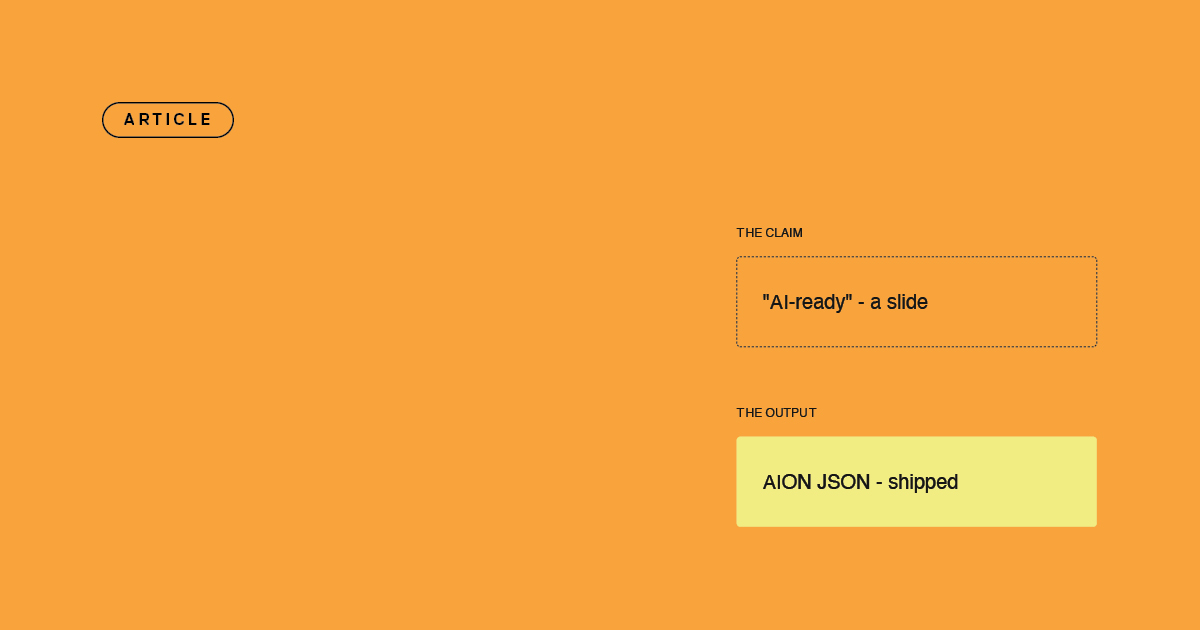
AI-ready content: who has actually shipped it?
A practical field guide to separating AI-ready content marketing from vendors who have actually shipped a structured, governed output for AI.
Article
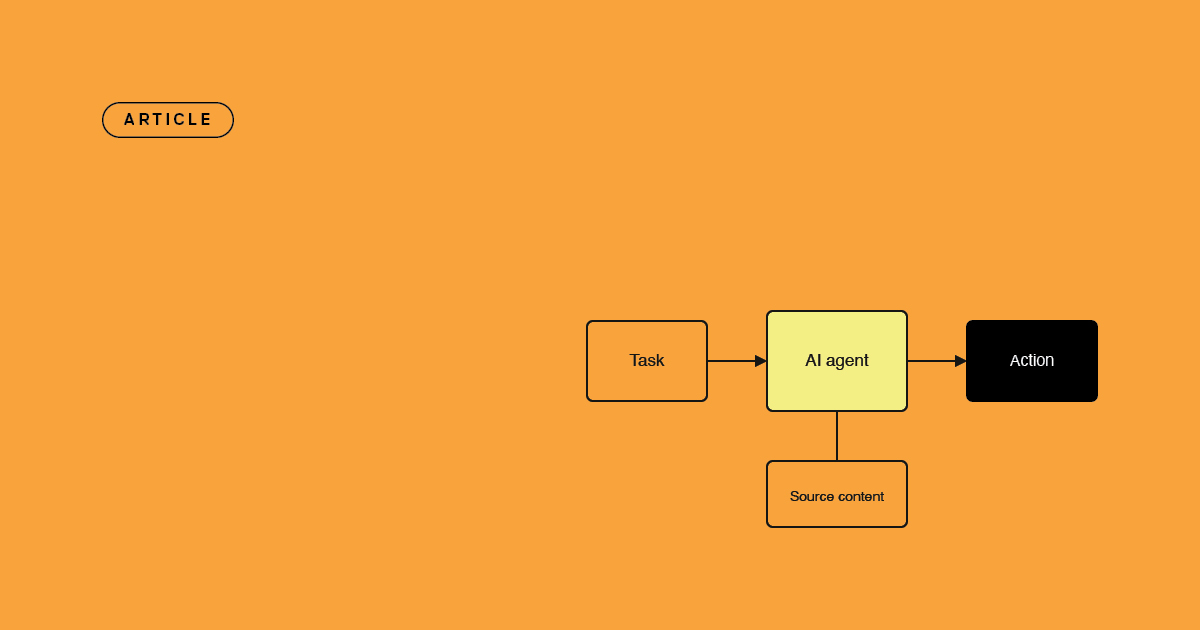
Agentic AI for documentation: a practical guide
How AI agents use documentation to take action - and why agentic AI raises the bar on structured, governed content.