Article
The hidden documentation risk threatening your ISO cert

Summary:
ISO certification doesn't fail in big dramatic ways. It fails in small, quiet ones - a printed document that no one replaced, an approval email that can't be found, a supplier specification that changed six months ago and wasn't tracked. These four documentation risks are the most common causes of ISO non-conformances in manufacturing, and all of them are invisible until an auditor goes looking.
The risks you can't see from the quality dashboard
Most quality managers have a clear view of their documented processes. What's harder to see is the gap between what the QMS says is controlled and what's actually happening at the point of use.
ISO auditors are specifically trained to find this gap. They don't just read your procedures - they walk the floor, ask operators to locate documents, and request the approval history for revisions made in the last twelve months. The questions are simple. The answers often aren't.
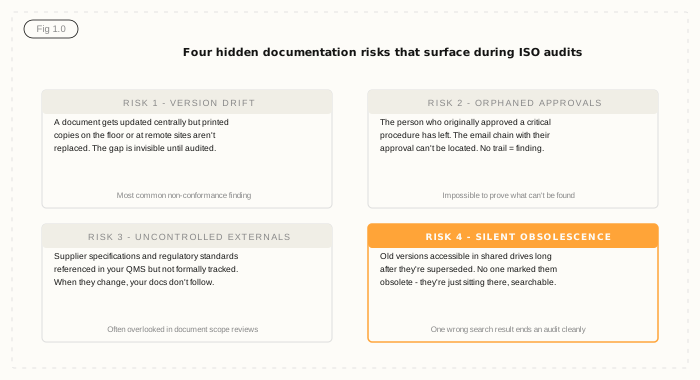
Here are the four documentation risks that generate the most non-conformances in manufacturing ISO audits.
Risk 1: Version drift
This is the most common ISO documentation finding. A document gets updated in the central system - a work instruction, an assembly procedure, a quality checklist - but the copies in circulation aren't replaced. Printed binders. Shared drive folders. Local SharePoint sites that someone set up during a remote work period and never integrated with the main system.
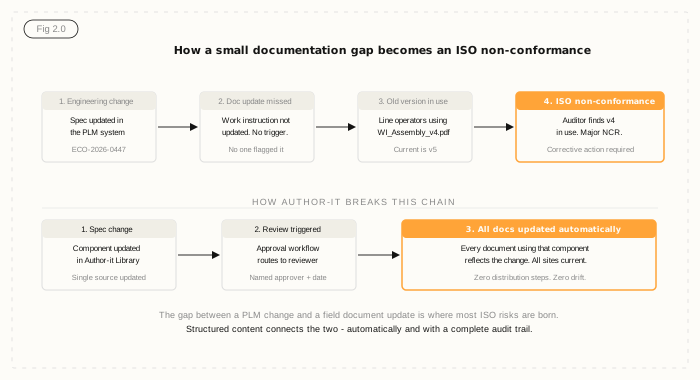
The result: the current version is version 5. The operator is working from version 3. They're not trying to circumvent the process - they simply don't know they have an old copy. The gap was created the moment the update was distributed by email and someone missed it.
Version drift is a distribution problem. It's eliminated by architecture, not by communication. When there's only one source and all outputs draw from it, distribution can't fail because there's nothing to distribute. See how manufacturing organisations use single-source publishing to remove this risk entirely.
Risk 2: Orphaned approvals
ISO 9001 requires a traceable approval trail for every controlled document. In practice, many manufacturers maintain this trail in email - someone sends a draft, a few people reply with approval, the document gets updated. That works until the approval is needed months later and can't be found.
The most vulnerable version of this problem: the approving manager has left the company. Their email archive is inaccessible or has been deleted. The document was correctly approved at the time - but the evidence is gone. An auditor can't verify compliance they can't see.
Structured content management with built-in review workflows eliminates this risk. Approvals are recorded in the system alongside the content, not in an inbox that belongs to an individual. The trail persists regardless of who approved it or whether they're still with the organisation.
Risk 3: Uncontrolled external documents
ISO 9001 Clause 7.5 requires that external documents - supplier specifications, regulatory standards, customer requirements - that affect your quality management system be identified and controlled. Many manufacturers can produce their internal documents on demand but struggle to demonstrate that external references are tracked.
A supplier changes a component specification. Your internal procedures still reference the old spec. An auditor checks both and the discrepancy is immediately apparent. The non-conformance isn't about the process - it's about the documentation failing to reflect a change that happened externally.
Controlling external documents requires knowing which of your internal content depends on them. That's straightforward in a component-based system where dependencies are tracked - and genuinely difficult in a folder-based one where documents are isolated files with no structured relationship to each other.
Risk 4: Silent obsolescence
Old versions of documents that haven't been marked as obsolete and remain accessible in shared drives, SharePoint, or email attachments are a persistent audit risk. The issue isn't that they exist - it's that they're searchable and look authoritative.
An operator searches the shared drive for an assembly procedure. Two results come back: the current version and a version from two years ago that someone never deleted. They open the wrong one. They follow the wrong instructions. An auditor finds evidence of the old procedure still in circulation.
ISO 9001 specifically requires that documents be protected against unintended use of obsolete versions. A publishing gate - the architectural control that prevents unapproved or superseded content from reaching any output - is the cleanest solution. Use the Structured Content Challenge to assess whether your current setup has this protection in place.
The common thread
All four risks share the same root cause: documentation managed as a collection of files rather than as structured, governed content. Files can drift, get lost, become inaccessible, or persist past their useful life. Structured content components, managed in a single library with versioning, approval workflows, and a publishing gate, eliminate each of these failure modes at the architectural level.
Author-it is a Component Content Management System built for exactly this challenge. The ROI calculator can help you estimate the cost - in audit remediation time, rework, and operational risk - of continuing to manage compliance documentation as files.

ISO certification risk FAQ
Q: What documentation risks most commonly cause ISO 9001 non-conformances?
A: The four most common documentation risks in ISO 9001 audits are version drift (outdated documents in use at point of use), orphaned approvals (approval trails that can't be located or verified), uncontrolled external documents (supplier specs and regulatory standards not formally tracked), and silent obsolescence (superseded documents still accessible in shared systems). All four can exist in an organisation that believes its documentation is under control.
Q: How does version drift cause ISO non-conformances?
A: Version drift occurs when a document is updated centrally but copies in circulation - printed binders, shared drive folders, email attachments - aren't replaced. Operators continue using an older version without knowing it's been superseded. Auditors check the version number at point of use against the approved current version in the QMS. A mismatch is a Clause 7.5 non-conformance. Version drift is a distribution problem - it's eliminated by having a single source rather than distributed copies.
Q: What is silent obsolescence in ISO document control?
A: Silent obsolescence is when superseded versions of documents remain accessible in shared systems after being replaced by a new version. ISO 9001 requires organisations to protect against unintended use of obsolete documented information. If an operator can search a shared drive and find an old version that looks current - no marking, no access restriction - and uses it, that's a Clause 7.5 violation. The fix is a publishing gate that prevents old versions from remaining accessible for operational use.
Q: How can manufacturers prevent orphaned approval trails?
A: Approval trails become orphaned when they exist in individuals' email inboxes rather than in the document management system. The solution is a built-in review and approval workflow where sign-off is recorded against the document in the system - not in email. Author-it's Review and Approve module records every review action with the reviewer's name, role, and timestamp directly in the content management system, independent of any individual's continued employment.
Q: Does ISO 9001 require control of external documents like supplier specifications?
A: Yes. ISO 9001 Clause 7.5 requires that external documents - supplier specifications, regulatory standards, customer requirements, and any other external sources that affect the quality management system - be identified and controlled. This means tracking which external documents are referenced, monitoring for changes, and ensuring internal documentation is updated when external sources change. This is often overlooked in favour of internal document control.
Q: How do you close documentation gaps before an ISO audit?
A: The most effective pre-audit review checks five things: current version availability at point of use for all controlled documents, a traceable approval trail for all revisions made in the last 12 months, a register of external documents and their current status, a confirmed list of obsolete versions removed or marked, and confirmation that all sites covered by the certification are operating from the same document versions. Gaps found during this review are better fixed before the audit than during it.
Q: Can a CCMS prevent ISO documentation risks?
A: Yes. A Component Content Management System addresses all four common documentation risks. Version drift is prevented by single-source architecture - there are no distributed copies to drift. Orphaned approvals are prevented by recording sign-offs in the system, not in email. Uncontrolled externals are managed through the library's dependency tracking. Silent obsolescence is prevented by the publishing gate, which blocks superseded content from remaining accessible for publication or use.
Published on:
Author:
May 22, 2026
Quinn Wright
Head of Sales
Related Resources
Article
Field crew AI: when a wrong answer is a safety risk
Why safety-critical field operations can't run AI on ungoverned content - and what deterministic, traceable answers actually require.
Article
AI-ready content: who has actually shipped it?
A practical field guide to separating AI-ready content marketing from vendors who have actually shipped a structured, governed output for AI.
Article
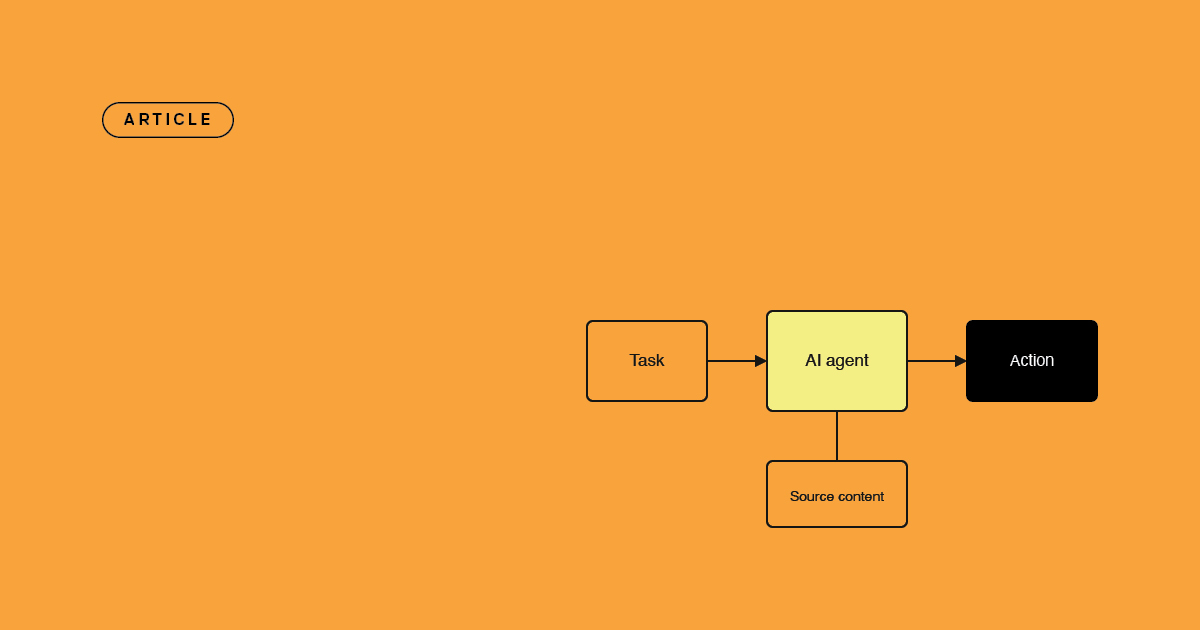
Agentic AI for documentation: a practical guide
How AI agents use documentation to take action - and why agentic AI raises the bar on structured, governed content.