Article
FDA 21 CFR Part 11 documentation requirements

Summary:
FDA 21 CFR Part 11 governs electronic records and electronic signatures in FDA-regulated industries, and most of what it demands is document control. Records must be attributable, legible, contemporaneous, original, and accurate, backed by secure audit trails, access controls, and reliable retrieval. Word files on a shared drive can't meet that bar. This guide maps each Part 11 requirement to a documentation-system capability and shows what good looks like. Author-it provides the audit trail, versioning, and approval controls a Part 11 programme depends on.
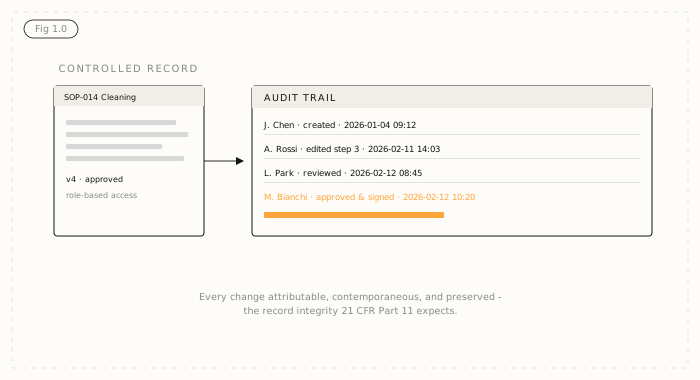
What 21 CFR Part 11 actually requires
Part 11 is the FDA's rule for when an electronic record or signature can be trusted as the equivalent of paper and ink. It doesn't tell you which software to buy. It tells you what controls your records must have: secure, time-stamped audit trails; access limited to authorised users; the ability to generate accurate and complete copies for inspection; controlled retention and retrieval; and integrity around electronic signatures.
If you manage documentation in a regulated environment, the practical question is whether your system can prove all of that on demand. For how structured content underpins regulated documentation more broadly, see Author-it for regulated manufacturing, then come back to the specifics below.
ALCOA: the data integrity test behind Part 11
Inspectors assess record integrity against ALCOA, five principles your documentation has to satisfy.
Attributable: every record and change is tied to a known person. You can say who wrote it and who changed it.
Legible: records are readable, and stay readable for the full retention period.
Contemporaneous: changes are recorded when they happen, not reconstructed later, with an accurate timestamp.
Original: the source of record is preserved, not a retyped or re-exported copy that could have drifted.
Accurate: there is one correct, current version, and no ambiguity about which it is.
The extended set, ALCOA+, adds complete, consistent, enduring, and available. The theme is the same: you must be able to trust the record, and prove it.
Where document control usually fails Part 11
Picture the common setup: procedures in Word, stored on a shared drive, reviewed over email. It fails ALCOA in predictable ways. There's no reliable audit trail, so you can't prove who changed what, or when. Access isn't controlled at the record level. Multiple copies mean no single original. Nobody can say with certainty which version was current on a given date. And an approval captured in an email thread is not a controlled electronic signature.
None of this means the team is careless. It means the tools were never built for the requirement. General-purpose collaboration tools weren't designed to produce a defensible audit trail.
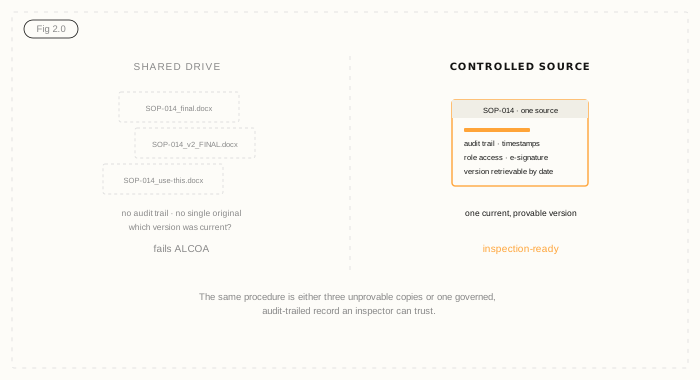
What a compliant documentation system looks like
Whether or not you use Author-it, this is the bar to aim for. Content lives in a single controlled repository, not scattered files. Every change is logged automatically with the user, timestamp, and what changed. Access is role-based. Review and approval run through a defined workflow with recorded sign-off. Version control operates at the component level, so you can retrieve the exact version that was current on any date. And you can generate accurate, complete copies for an inspector without a scramble.
Where Author-it fits
Author-it gives you the document-control capabilities a Part 11 programme relies on: built-in Review and Approve with a full audit trail, component-level version control, role-based access, and a single-source library with a publishing gate so only approved content is released. It has done this in regulated industries for 25+ years.
One honest note: no software makes you Part 11 compliant on its own. Compliance is a programme - validation, SOPs, and training included - and the system is one part of it. What Author-it removes is the structural gap that trips most teams up: the missing audit trail, the uncontrolled copies, the version you can't prove. If you also plan to feed this content to AI, the same governed source publishes to Author-it's structured AION output, so approved content is the only content your AI sees. To benchmark your current setup, try the Structured Content Challenge.

21 CFR Part 11 FAQ
Q: What are the documentation requirements of 21 CFR Part 11?
A: Part 11 requires that electronic records be trustworthy and inspection-ready. In practice that means secure, time-stamped audit trails of every change, access limited to authorised users, controlled electronic signatures, reliable retention and retrieval, and the ability to generate accurate, complete copies for the FDA. The records must also satisfy the ALCOA data-integrity principles.
Q: What are the ALCOA principles?
A: ALCOA is the FDA's data-integrity framework: Attributable (tied to a known person), Legible (readable and durable), Contemporaneous (recorded when the event happened), Original (the preserved source of record), and Accurate (one correct current version). ALCOA+ adds complete, consistent, enduring, and available. Documentation systems are judged against these.
Q: Does a CCMS make you 21 CFR Part 11 compliant?
A: No single tool makes you compliant. Part 11 compliance is a programme that includes system validation, SOPs, and training. What a Component Content Management System does is provide the controls the programme relies on - audit trail, version control, access control, and approval workflows - and remove the structural gaps that unstructured files leave. The organisation still owns validation and process.
Q: What does a Part 11 audit trail need to capture?
A: A time-stamped, secure record of who did what and when: who created or changed a record, the nature of the change, and the date and time, without the ability to quietly overwrite history. It has to be reliable enough to reconstruct a record's history for an inspector. Audit trails kept manually or in email don't meet this.
Q: Why do Word files on a shared drive fail Part 11?
A: Because they can't prove integrity. There's no reliable audit trail of who changed what and when, access isn't controlled at the record level, multiple copies mean no single original, and you usually can't prove which version was current on a given date. Approvals captured in email aren't controlled electronic signatures. The tools weren't built for the requirement.
Q: Is an electronic signature required under Part 11?
A: Part 11 governs electronic signatures where you choose to use them in place of handwritten ones, setting requirements for how they are applied and linked to records. You aren't forced to use electronic signatures, but if you do, they must meet Part 11's controls: tied to the signer, non-transferable, and recorded with the signing meaning and timestamp.
Published on:
Author:
July 6, 2026
Osmar Silva
CTO
Related Resources
Article
Field crew AI: when a wrong answer is a safety risk
Why safety-critical field operations can't run AI on ungoverned content - and what deterministic, traceable answers actually require.
Article
AI-ready content: who has actually shipped it?
A practical field guide to separating AI-ready content marketing from vendors who have actually shipped a structured, governed output for AI.
Article
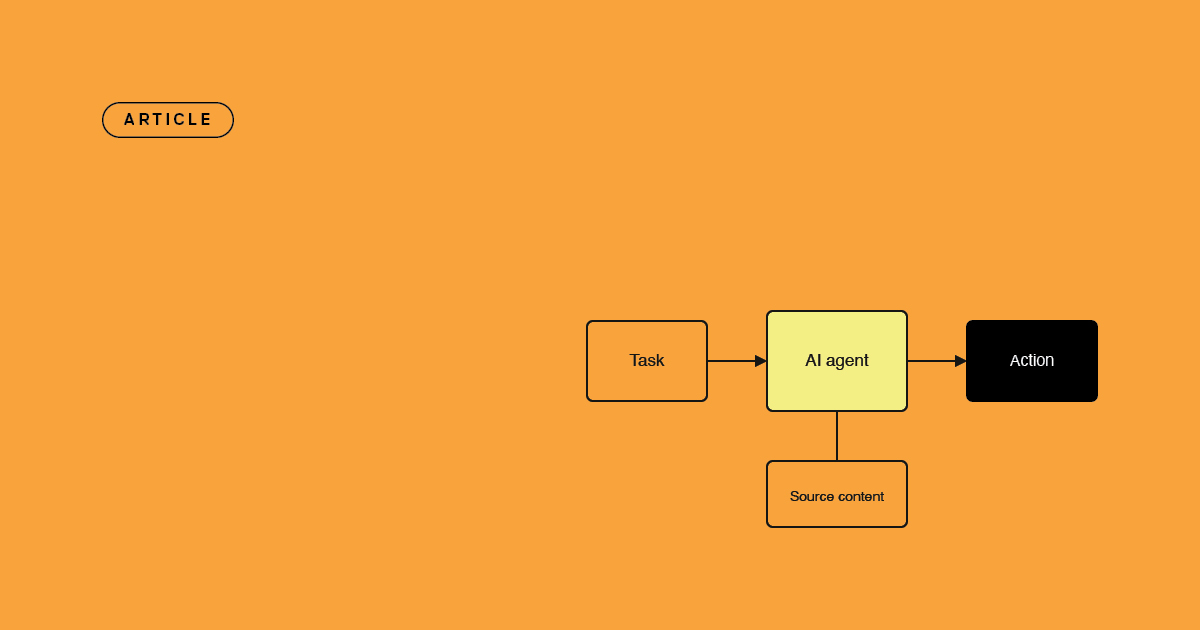
Agentic AI for documentation: a practical guide
How AI agents use documentation to take action - and why agentic AI raises the bar on structured, governed content.