Article
How a CCMS keeps ISO-certified manufacturers compliant

Summary:
Most manufacturers approach ISO certification as a project - a defined effort with a start date and an end date. The hard truth is that certification is the beginning, not the end. Staying compliant across changing product lines, growing operations, and regular surveillance audits requires a different kind of system than the one that got you certified. A Component Content Management System provides the architecture for continuous compliance - not just audit-day performance.

Certification versus compliance - why the difference matters
Getting ISO 9001 certified typically involves a focused effort: document your processes, establish your quality management system, clean up your documentation, and demonstrate to an auditor that everything is working. For most organisations, this is a manageable project.
Staying certified over the following three years - through product changes, staff turnover, process evolution, and regular surveillance visits - is a different challenge. It requires that the systems you put in place on certification day continue to work without constant intervention. Most don't.
The gap between certification and continuous compliance is almost always a documentation gap. Procedures get updated informally. Approvals get done by email. New staff don't follow the controlled process because no one showed them. By the time the next surveillance audit arrives, the documentation has drifted from what the QMS says it should be.
What a CCMS does differently
A Component Content Management System doesn't just store documents - it manages the lifecycle of content. Every piece of content in a CCMS has a defined state: Draft, In Review, Approved, Published, Archived. The transition between states is governed by workflows, not by convention.
The critical difference for ISO compliance is the publishing gate. In Author-it, content cannot reach any published output - PDF for the shop floor, HTML for an internal portal, AI-ready JSON via AION - unless it has been approved. This isn't a rule that someone can forget to apply. It's an architectural constraint. Unapproved content is unpublishable, period.
This means the compliance question - is this the current approved version? - has a definitive answer at all times. It's not a question you have to verify by checking email threads or hunting through shared drives. It's a property of the system.
The approval trail that survives everything
One of the most common audit findings involves approval trails for document revisions that happened 12 or 18 months ago. Email-based approval processes work until the approver leaves the company, the email account gets archived, or someone just can't find the right thread under audit pressure.
Author-it's Review and Approve module records every approval action - who reviewed, who approved, when, and what version they approved - directly in the system alongside the content. The trail doesn't live in someone's inbox. It lives in the content management system where it's searchable, exportable, and auditor-ready on demand.
For manufacturing organisations that have been through a surveillance audit and had to scramble for approval evidence, this is often the single most immediately valuable capability. The scramble becomes a search.
Continuous compliance across growing operations
The organisations that most benefit from CCMS-enabled ISO compliance are those whose complexity is growing. New product lines mean new documentation. New markets mean translation. New sites mean distribution challenges. Manual documentation processes scale linearly with complexity - more products means more people and more effort.
Structured, component-based content doesn't scale that way. A shared warning, specification, or procedure step exists once in the library. It's referenced by every document that needs it. When it changes - because a regulation changed, or engineering updated a spec - you update it once. Every document, at every site, in every language reflects the change. The version increment is one event with one approval. See how manufacturers using this approach have reduced documentation overhead significantly.
From surveillance audit to no-notice readiness
The practical test of a continuous compliance system is whether you'd be comfortable with a no-notice audit tomorrow. Most quality managers at organisations without a structured content system would not be. There would be things to check, approvals to verify, and sites to contact first.
With a CCMS managing your documentation, the answer to most audit questions is retrievable in seconds. Current version of document X? In the system. Approval trail for the last revision? In the system. Which sites are running which version? All of them are running the published version, because that's the only version that exists.
Use the Structured Content Challenge to assess honestly how your current setup would perform against this standard - and where the gaps are most likely to be found.

Making the case internally
Documentation teams often struggle to justify investment in structured content management because the costs of the current approach are distributed and invisible. The hours spent chasing approvals, verifying distribution, preparing for audits, and correcting findings don't appear on a single budget line - they're absorbed across the team and treated as normal overhead.
A useful way to surface the real cost is to track documentation hours specifically during the six weeks before a surveillance audit. For most organisations, this reveals a significant spike in effort that has nothing to do with writing new content - it's entirely remediation and verification of the existing state. That effort is the cost of not having a continuous compliance system. The ROI calculator turns that effort into a number that makes the case.

CCMS and ISO compliance FAQ
Q: How does a CCMS help manufacturers maintain ISO 9001 compliance?
A: A Component Content Management System maintains ISO 9001 compliance through four mechanisms: a publishing gate that prevents unapproved content from reaching any output, built-in approval workflows with full audit trails, single-source architecture that keeps all sites and outputs on the same current version, and component-level version control that handles shared content across multiple documents and product lines. Together these make compliance a continuous system property rather than something that requires periodic human verification.
Q: What is the difference between ISO certification and ISO compliance?
A: ISO certification is a point-in-time event - an external audit confirms that your quality management system meets the standard's requirements on that day. ISO compliance is a continuous state - your QMS continues to meet the requirements across all processes, all sites, and all documentation over time. Getting certified requires a focused project effort. Staying compliant requires systems that maintain control automatically between audits. Most non-conformances found during surveillance audits are the result of processes that worked on certification day but drifted afterwards.
Q: What is a publishing gate in document control?
A: A publishing gate is an architectural control that prevents content from reaching any published output unless it has been through the defined approval workflow. In Author-it, this means unapproved content cannot be published to PDF, HTML, or AI-ready JSON via AION - not because of a rule that someone can forget to apply, but because the system architecture makes it impossible. This directly satisfies the ISO 9001 Clause 7.5 requirement to prevent unintended use of unapproved or obsolete documented information.
Q: How does a CCMS handle ISO compliance when product lines or operations grow?
A: A CCMS scales through content reuse. Shared specifications, warnings, and procedures exist as single components in the library, referenced by every document that needs them. When operations grow - new product lines, new sites, new markets - new documents reference existing components rather than duplicating content. When a component changes, every document that references it is automatically updated. This means complexity grows without a proportional increase in documentation overhead or compliance risk.
Q: How does a CCMS support ISO 9001 audit preparation?
A: With a CCMS, most audit preparation becomes retrieval rather than verification. The current version of every document is in the system. The approval trail for every revision is in the system. All sites access the same published source. There's no distribution to verify, no approval emails to locate, and no site-by-site check that everyone has the right version. The documentation state that exists on audit day is the same state that existed three months earlier - because the system maintains it continuously.
Q: Can a CCMS replace a dedicated document control system for ISO compliance?
A: Yes, for most manufacturing organisations. A CCMS provides everything a dedicated document control system provides - version control, approval workflows, access management, audit trails - plus structured authoring, content reuse across product lines, multi-format publishing, and translation management. The advantage is that all of these capabilities work from a single library rather than requiring separate systems. For organisations managing complex product documentation alongside their QMS, a CCMS typically provides better overall ISO compliance coverage than a document control system alone.
Q: How long does it take to implement a CCMS for ISO compliance?
A: For most manufacturing organisations, Author-it implementations take between 60 and 90 days from project kickoff to operational deployment. The services team works with the organisation to design the content architecture, migrate existing documentation, configure approval workflows, and train the team. Organisations with complex legacy content or large document libraries may take longer. The Author-it services team has completed implementations from Word, SharePoint, FrameMaker, and legacy document management systems.
Published on:
Author:
May 2, 2026
Adrian Winks
CEO
Related Resources

Article
Field crew AI: when a wrong answer is a safety risk
Why safety-critical field operations can't run AI on ungoverned content - and what deterministic, traceable answers actually require.
Article
AI-ready content: who has actually shipped it?
A practical field guide to separating AI-ready content marketing from vendors who have actually shipped a structured, governed output for AI.
Article
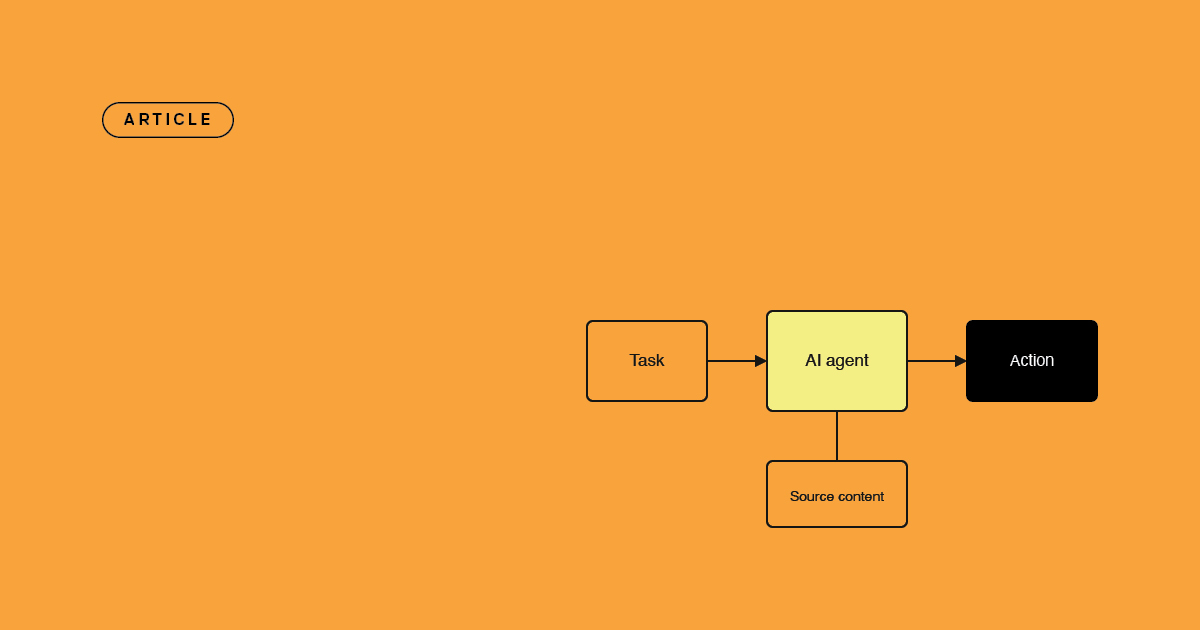
Agentic AI for documentation: a practical guide
How AI agents use documentation to take action - and why agentic AI raises the bar on structured, governed content.