Article
Information Management: 6 Key Stages + Best Practices

What is the Information Management Process and Why Should You Care?
In today’s hyper-competitive business environment, information is one of your most valuable assets. Organisations that manage information effectively gain a significant edge - they make better decisions, uncover new insights, and avoid costly compliance risks.
But here’s the question: What does an efficient information management process look like, and why is it so important? Let’s break it down.
What is Information Management?
At its core, the information management process is how your business collects, organises, maintains, archives, and disposes of information throughout its lifecycle.
This includes everything from customer data and meeting minutes to audio recordings, promotional videos, and compliance documentation. Whether physical or digital, every piece of information needs a clear process to ensure accuracy, security, and accessibility.
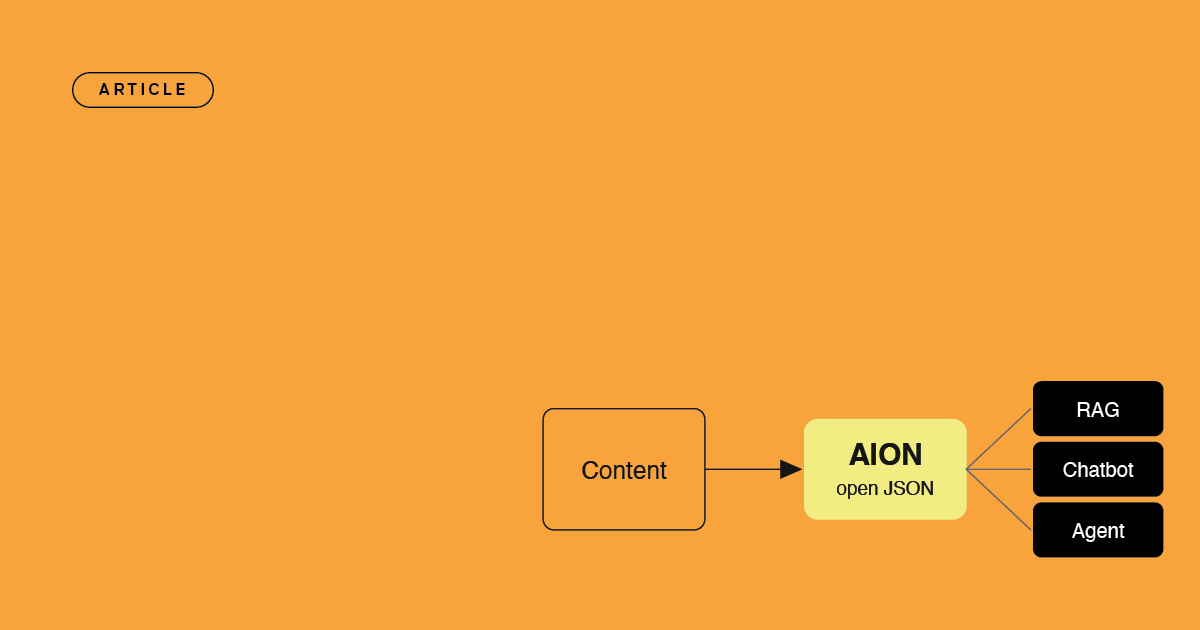
Managing that lifecycle at scale is exactly what a component content management system (CCMS) does. And structured, governed content is increasingly the AI content foundation behind reliable enterprise AI - published, when you are ready, as AI-ready structured output (AION).

6 Key Stages of Information Management
An effective process typically includes six stages:
- Collection: Identify what information is useful and accurate—and what can be discarded.
- Storage: Secure storage is critical in an era of data breaches. Look for systems with access controls, versioning, and backups.
- Curation: Organised information adds value. Proper curation enables analytics, trend identification, and audit readiness.
- Dissemination: Ask: Who needs this information, in what format, and under what security level? Establish these rules before distribution.
- Archiving: Define retention policies and classification systems for archived content.
- Destruction: With rising storage costs and privacy laws, some data must be securely destroyed when no longer needed.

Information Management Systems (IMS)
IMS software helps businesses store, organise, and retrieve electronic information. Benefits include:
- Increased efficiency
- Higher security
- Greater transparency
- Advanced analytics
Types of IMS include CRM systems, Business Intelligence tools, Sales Force Automation, Transaction Processing Systems, and Knowledge Management Systems.
How to Create Your Information Management Process
Start with strategic planning:
- Define scope (physical vs electronic data)
- Identify compliance and security requirements
- Map the information lifecycle
- Plan for disaster recovery and backups
Maintain a Robust Information Management Process with Author-it
Here’s where Author-it changes the game.
Why Author-it?
- Cloud-Based CCMS: Access and manage content securely from anywhere.
- Structured Content Without DITA Complexity: No XML expertise required—perfect for non-technical users.
- Reusable Components: Update once, publish everywhere.
- Automation and AI Assistance: Reduce manual work and ensure compliance.
- Enterprise Scalability: Built for global organisations with complex documentation needs.
Instead of juggling multiple systems or dealing with duplicate files, Author-it provides a single source of truth for all your content. It’s not just an IMS - it’s a future-proof documentation solution that streamlines every stage of the information lifecycle.
Ready to simplify your information management? Book a demo and see Author-it in action, learn more about the solution here, or view our recent case studies and see the benefits first-hand.
Published on:
Author:
December 19, 2021
Adrian Winks
CEO
Related Resources

Article
The CCMS reckoning: six priorities for the AI era
A response to the industry's CCMS reckoning: the six priorities content leaders now face, and an honest look at which are shipped versus roadmap.

Article
The real cost of DITA - and when you don't need it
The cost of DITA is mostly staffing and process. Here is where it hides - and how to get topic reuse and single-source publishing without XML.
Article
AI content delivery: own your output, not a hub
The difference between renting an AI delivery hub and owning your content as open, portable JSON that feeds any AI stack you build or buy.